
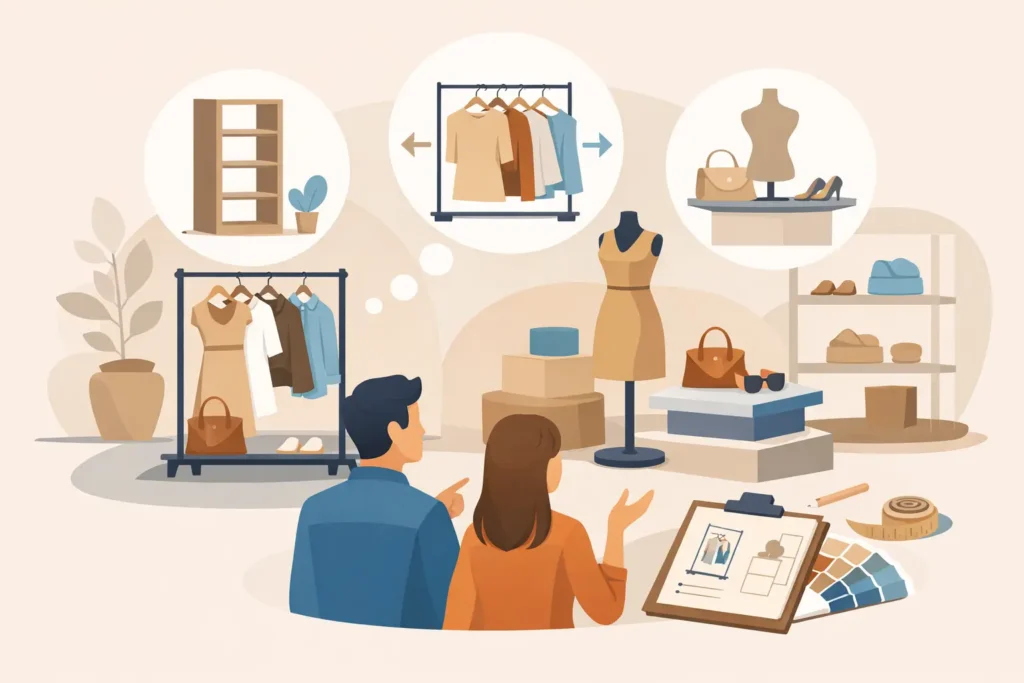
A fashion floor can lose sales long before pricing becomes the issue. When apparel looks crowded, hard to browse, or disconnected from the brand, shoppers hesitate. That is why fashion store display fixtures are not just store equipment. They are a working part of merchandise strategy, traffic flow, and day-to-day store operations.
For retailers, fit-out contractors, and project teams, fixture selection needs to do more than look polished on opening day. It has to support stock rotation, withstand daily use, fit the available footprint, and help staff maintain visual order with minimal effort. In fashion retail, where presentation directly affects perceived value, the right fixture package helps convert square footage into selling space.
What fashion store display fixtures need to achieve
In a commercial setting, fixtures have a clear job. They need to present apparel and accessories in a way that is easy to shop, easy to replenish, and consistent with the brand position. A boutique selling premium womenswear will not use the same display logic as a value-focused chain or a sportswear concept, but the commercial requirements are similar.
A strong fixture plan should improve product visibility without overwhelming the customer. It should guide movement through the store, create focal points for seasonal collections, and make core categories easy to find. It also needs to balance density and openness. Too few fixtures can make the space feel under-merchandised. Too many can reduce sightlines and create friction in high-traffic zones.
This is where buyers often need a practical view rather than a purely design-led one. A fixture that looks refined in a rendering may underperform if it limits hanging capacity, complicates folding standards, or takes too much time for staff to maintain.
Core types of fashion store display fixtures
Most apparel environments rely on a mix of wall-mounted, freestanding, and feature-display fixtures. Each serves a different commercial purpose, and the best results usually come from combining them with clear intent.
Wall systems and perimeter fixtures
Wall-mounted display systems are typically the backbone of fashion retail layouts. They help maximize vertical space and keep the center of the store open for movement and feature storytelling. Depending on the concept, wall bays may support hanging rails, shelving, face-outs, waterfall arms, or accessory hooks.
For stores with limited floor area, perimeter fixtures do significant work. They allow a retailer to hold more inventory without making the store feel compressed. They are also useful for category zoning, such as separating denim, formalwear, kidswear, or accessories along defined wall runs.
Freestanding garment racks and merchandisers
Freestanding racks bring flexibility. They are useful for new arrivals, promotional edits, capsule collections, and reworked floor plans. Straight racks, round racks, and double-rail units each suit different stock densities and shopping styles.
The trade-off is that freestanding units can either improve flow or disrupt it. In a larger store, they can create a strong path and support cross-merchandising. In a tighter footprint, too many movable units can quickly make the sales floor feel disorganized. Spacing matters as much as the fixture itself.
Display tables and nesting tables
Tables remain a staple in fashion stores because they create visual pause points. They work especially well for folded product, featured outfits, accessories, and coordinated collections. Nesting tables add flexibility by allowing different heights and layered product presentation.
They are most effective when used with discipline. Overloading tables can reduce the impact of featured merchandise and create maintenance issues. For high-turn categories, tables should support quick recovery and frequent size replenishment.
Mannequins and form displays
Mannequins are often the highest-impact visual merchandising tool in a fashion store. They show product in context, communicate styling direction, and help customers understand fit, layering, and outfit building at a glance.
They should be treated as focal fixtures, not filler. A well-placed mannequin grouping at the storefront, entrance, or campaign zone can raise attention to key looks. Poor placement, on the other hand, can block sightlines or interrupt customer movement.
Accessory and specialty fixtures
Fashion retail rarely ends at apparel. Bags, shoes, belts, jewelry, eyewear, and small leather goods often require dedicated display hardware. Specialty fixtures help protect product presentation and improve shoppability for smaller items that can easily appear cluttered.
This is also where material choice and detailing matter. Acrylic displays, shelving accessories, lockable cases, and branded sign holders may all support a cleaner and more secure presentation depending on the merchandise value and the store format.
How to choose fixtures based on store format
Not every fashion environment should be equipped the same way. The right display plan depends on the size of the store, the merchandise mix, the expected footfall, and the brand’s price position.
A boutique format usually benefits from fewer fixtures with stronger visual presence. The goal is not maximum stock density. It is controlled presentation, better spacing, and a more curated feel. In these stores, finish quality becomes especially important because every fixture is more visible.
A chain apparel store has different priorities. It needs fixtures that are durable, scalable, and easy to standardize across locations. Stockholding capacity and reset efficiency often matter as much as appearance. Modular systems are typically the better fit because they support seasonal changes without requiring a full refit.
For department-style fashion environments, zoning becomes the main issue. Fixtures need to define category boundaries while still maintaining an open floor. A mix of perimeter systems, central racks, and branded feature units often works best here.
Pop-up stores and promotional spaces are another case entirely. They usually need lightweight, fast-install fixtures that still deliver a premium presentation. Portability and speed of setup may outweigh long-term durability, though not at the expense of basic stability.
Materials, finishes, and durability in commercial use
Fixture selection is often judged first by appearance, but buyers should evaluate construction just as closely. Fashion stores experience daily contact from staff, shoppers, hangers, folding activity, and frequent merchandising changes. Weak finishes show wear quickly, especially on rails, shelf edges, and base sections.
Metal fixtures are widely used because they offer strength, clean lines, and good adaptability. Wood or wood-look finishes can soften the environment and support a more premium or lifestyle-led brand image. Glass and acrylic are effective in selective areas, especially for accessories, but they need to be specified carefully based on maintenance requirements and risk of damage.
There is rarely one best material across the whole store. A mixed-material approach often performs better, combining durability where volume is high and refined finishes where presentation needs to do more brand work.
Layout planning matters as much as the fixture itself
Even high-quality fashion store display fixtures can underperform in the wrong layout. A good fixture package should support the natural customer journey from storefront to feature zone to core stock areas and fitting rooms.
Front-of-store fixtures should create impact without blocking entry. Mid-floor fixtures should help organize movement rather than create dead ends. Wall systems should carry category depth, and promotional fixtures should sit where they can influence traffic instead of being hidden in low-visibility corners.
Operational spacing also deserves attention. Staff need room to replenish, recover, and clean around fixtures. Customers need enough clearance to browse comfortably, especially in stores serving families or high weekend traffic. If a layout looks efficient on paper but creates friction during trading hours, the fixture plan needs adjustment.
Why modularity usually wins
Fashion retail changes fast. Product drops shift, campaigns rotate, and seasonal categories need different presentation methods throughout the year. Fixed, inflexible fixtures can look appealing during fit-out but become restrictive once the store starts operating.
Modular systems usually provide a stronger long-term return because they can be adapted with different arms, shelves, hooks, or display components. This helps retailers react to assortment changes without replacing major fixture sections. It also helps multi-location brands maintain consistency while still adjusting store layouts to local footprints.
For procurement teams and contractors, modularity can reduce complexity across rollout projects. It simplifies planning, ordering, maintenance, and future updates. For many operators in the MENA region, where project timelines and commercial realities can shift quickly, that flexibility is a practical advantage.
Working with a supplier that understands retail use
Choosing fixtures is not only about selecting products from a catalog. It is about matching display systems to store size, merchandise type, traffic level, and visual merchandising goals. That requires a supplier that understands how fixtures perform in real retail conditions, not just how they appear in isolation.
A dependable trade partner should be able to advise on category suitability, installation logic, material options, and layout efficiency. That is especially important when a project includes multiple display needs across signage, shelving accessories, security elements, and fashion presentation hardware. A single-source approach can reduce coordination issues and help keep the store concept aligned from planning through execution.
JS Retail Displays serves this type of requirement by supporting commercial buyers with practical display solutions across multiple retail categories, including fashion environments where presentation and functionality need to work together.
The right fixture decision is rarely the most decorative one. It is the one that makes merchandise easier to see, easier to shop, and easier to manage every day after the store opens.