
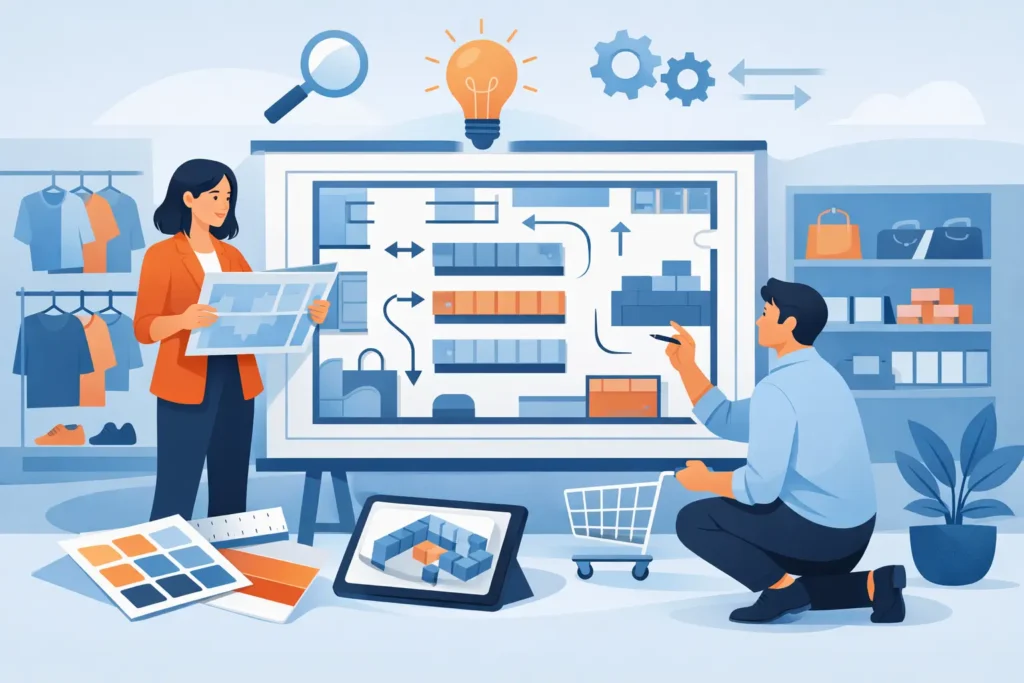
A retail floor can look fully fitted and still underperform. The usual problem is not a lack of fixtures or product range. It is that the space was never planned around shopper movement, product priorities, and operational realities. If you are working out how to plan retail store layout, the goal is not simply to make the store look organized. The goal is to create a selling environment where customers can navigate easily, products are visible, staff can replenish efficiently, and every square foot supports revenue.
For store owners, fit-out teams, and procurement decision-makers, layout planning sits at the point where merchandising, operations, and customer experience meet. A good layout helps shoppers find what they need and notice what they did not plan to buy. It also reduces dead zones, protects high-value stock, and makes better use of display equipment.
How to plan retail store layout around customer behavior
The best layout plans start with traffic patterns, not fixture catalogs. Before selecting gondolas, wall systems, dump bins, or promotional display stands, you need a realistic picture of how customers enter, turn, pause, and exit.
In many stores, shoppers naturally drift to the right after entering. That makes the decompression zone near the entrance especially important. This is not the place for dense messaging or complicated product selections. Customers need a few seconds to adjust. If the first few feet are overcrowded, you lose visibility and create friction immediately.
Beyond that entry zone, the layout should lead customers into the main selling area with clear sightlines. Wide aisles may feel less space-efficient on paper, but if they improve circulation and basket-building, they often outperform tightly packed layouts. That trade-off matters in supermarkets, convenience stores, fashion outlets, and electronics showrooms alike.
It also helps to identify what shoppers are coming for versus what you want them to discover. Essential items can be positioned deeper in the store to pull traffic through the space. Higher-margin, seasonal, or promotional products should sit where traffic naturally slows, such as endcaps, queue areas, and feature zones.
Start with your store format and product mix
There is no universal answer to how to plan retail store layout because the right structure depends on what you sell, how customers shop, and how often stock changes. A supermarket layout prioritizes category logic, basket flow, replenishment access, and promotional flexibility. A fashion store may focus more on storytelling, visibility, and fixture presentation. An electronics retailer has to balance product interaction, security, and brand-led display areas.
This is why category zoning should come before fixture selection. Group your products into destination categories, impulse categories, promotional lines, and support items. Once these roles are clear, it becomes easier to assign space based on commercial value rather than habit.
Fast-moving categories usually need the most accessible shelving and the strongest replenishment support. Slower-moving but high-margin categories may justify premium display treatment even if they take less space. Bulky products require room for handling and visual breathing space. Smaller items often need controlled presentation to avoid looking cluttered.
If your business operates multiple locations, consistency matters, but so does local adaptation. A store in a dense urban area may need a tighter, convenience-led layout. A larger suburban unit may support wider aisles, stronger feature displays, and broader category adjacencies.
Build the layout in zones, not rows
A common planning mistake is to think only in terms of shelving runs and aisle counts. Strong stores are usually planned in functional zones. These zones may include entrance and orientation, power categories, promotional space, service counters, checkout, and perimeter display.
This approach gives you more control over how the store performs. The entrance introduces the store and sets the visual standard. Power categories anchor traffic and support repeat visits. Promotional zones give you flexibility for seasonal campaigns, supplier-funded displays, or new product launches. Checkout can capture impulse sales, but only if it is not overloaded.
Perimeter space deserves special attention. Wall-mounted fixtures, slatwall systems, shelving bays, and illuminated signage can carry higher visual impact than center-floor equipment. In many stores, the perimeter works best for premium, branded, or vertically merchandised categories because it provides cleaner sightlines and stronger presentation.
The center floor should then support browsing and volume selling. Gondola shelving remains effective because it is adaptable, space-efficient, and easy to remerchandise. The exact height matters. If center fixtures are too tall, they block visibility and make the store feel compressed. If they are too low, you lose capacity. The right balance depends on store size, category density, and whether you need open views for security and supervision.
Fixture planning should support selling, not just storage
When considering how to plan retail store layout, fixture choice should follow product behavior and shopper interaction. Too often, buyers select fixtures based only on dimensions and price. In practice, the fixture has a direct effect on visibility, accessibility, and how much stock the customer believes is available.
For packaged grocery and household goods, modular shelving systems with adjustable shelves support clean facings and efficient stock rotation. For fashion, display tables, garment rails, mannequins, and wall fixtures need to create hierarchy rather than visual noise. For electronics and high-value categories, secure display systems are essential, but they still need to allow enough visibility and interaction to support purchase decisions.
Signage should also be built into the plan early. Category signs, shelf-edge communication, poster frames, LED displays, and promotional holders are not finishing touches. They guide navigation, reinforce pricing, and help convert attention into action. If signage is added after the layout is fixed, it often ends up competing with fixtures instead of supporting them.
Use adjacencies to increase basket size
Good layouts do more than help people find products. They encourage related purchases. This is where adjacency planning becomes commercially valuable.
A grocery store might position snacks near beverages, baking tools near ingredients, or cleaning accessories near core household products. A fashion store can build outfits across neighboring fixtures. An electronics retailer can place accessories, add-ons, or protection products close to the main device category.
The key is to keep these relationships intuitive. Forced adjacencies confuse shoppers and can dilute category clarity. Cross-merchandising works best when it saves time, solves a need, or inspires a complete purchase. If the logic is obvious, customers respond well. If it feels random, it becomes background clutter.
Leave room for operations and replenishment
A layout that looks efficient during a fit-out can fail once the store opens. Staff still need to replenish, clean, rotate stock, manage queues, and access storage. Customers with baskets, carts, strollers, or trolleys need room to move without friction.
This is where practical planning matters. Aisle width, fixture spacing, back-of-house access, and checkout positioning all affect daily operations. So does the placement of promotional displays. A display that wins attention but blocks replenishment routes can create recurring labor inefficiencies.
Security also needs to be considered from the beginning. High-value products should be displayed in areas with clear staff visibility, controlled access, and appropriate anti-theft equipment. Blind corners and overbuilt fixture lines increase risk. In categories like electronics, cosmetics, or accessories, secure display planning is part of layout planning, not a separate exercise.
Test the layout before finalizing it
Even experienced retail teams benefit from pressure-testing the floor plan. A layout can seem logical in CAD drawings and still feel awkward in real use. Walk the customer journey from the entrance to key categories, then through promotional areas and checkout. Walk the staff journey too, including replenishment paths and service tasks.
Ask practical questions. Can customers immediately understand the store? Are priority categories easy to locate? Are feature displays visible from key approach angles? Can carts pass comfortably? Is there enough flexibility for promotions and seasonal resets?
It also helps to identify the non-negotiables versus the variables. Structural columns, service counters, and fire-safety requirements are fixed. Promotional zones, secondary displays, and some fixture heights may be adjusted after opening based on performance.
This is where a supplier with broad category knowledge can add value. A business such as JS Retail Displays can support fixture selection across shelving, signage, POP display, anti-theft systems, acrylic holders, and digital display requirements so the final plan works as a connected retail environment rather than a collection of separate products.
Plan for change, not just opening day
The strongest layouts are not the most rigid. They are the ones that can absorb seasonality, promotions, category shifts, and future growth without expensive rework. Modular fixtures, movable display units, flexible signage systems, and scalable merchandising components make that easier.
That matters even more for chains and expanding retailers. If you can standardize core layout logic while keeping room for local category emphasis, you improve rollout speed and in-store consistency without forcing every location into the same mold.
A store layout should earn its space every day. When the plan is built around customer movement, product visibility, operational flow, and fixture performance, the store works harder from the moment the doors open. Start with how people shop, then build the floor around what your business needs to sell well.