
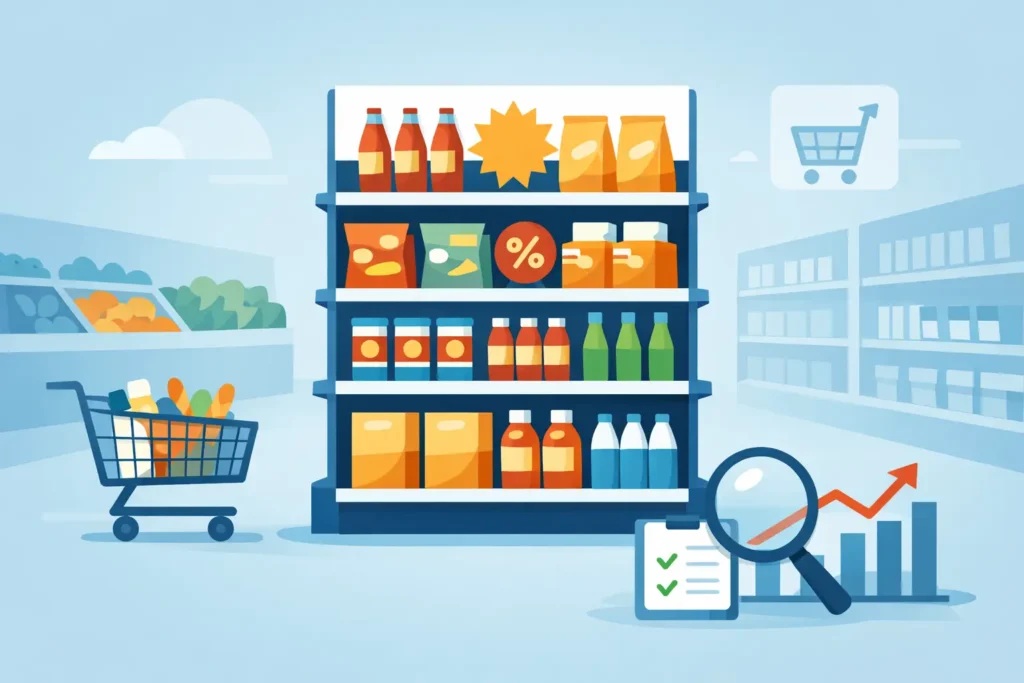
An endcap is not spare shelf space. It is one of the most visible selling locations in a supermarket, often seen from multiple aisles before shoppers reach the main category bay. Knowing how to organize supermarket endcaps means treating each one as a focused commercial display with a clear purpose, adequate stock, and fixtures that support fast shopping.
For supermarket operators, the opportunity is significant. A well-planned endcap can introduce a promotion, build a seasonal story, increase basket value, or move high-volume inventory. A poorly planned one creates clutter, causes replenishment issues, and trains shoppers to ignore the display. The difference usually comes down to product selection, visual hierarchy, fixture planning, and disciplined execution.
Start With One Clear Endcap Objective
Every endcap should have a single primary job. Trying to promote too many unrelated products weakens the message and makes the display harder to shop. Before selecting fixtures or stock, decide whether the endcap is intended to support a price promotion, seasonal demand, new product launch, cross-merchandising opportunity, private-label campaign, or clearance program.
A value-driven endcap may focus on a high-demand item with a large, easy-to-read price message. A seasonal endcap, by contrast, may combine products that solve one shopper need, such as grilling supplies, back-to-school snacks, or holiday entertaining items. The objective determines the right mix of products, signage, and display hardware.
This focus also helps store teams replenish correctly. If employees understand that an endcap is built around “quick breakfast solutions” rather than a general collection of packaged foods, they can immediately recognize when a replacement product does not belong there.
Select Products That Work Together
The strongest supermarket endcaps usually feature one hero product or a tightly connected group of products. A hero product creates instant recognition and reduces the time shoppers need to understand the offer. It should have broad appeal, dependable availability, and packaging that reads clearly from a distance.
Cross-merchandising can increase average transaction value when the product relationship is practical. Pasta can be paired with sauce and grated cheese. Coffee can be supported by biscuits or creamers. A barbecue display can bring together charcoal, sauces, disposable trays, and selected snacks. The key is relevance. Products that share a promotional price but have no natural connection often look like excess stock rather than a considered retail offer.
Consider physical compatibility as well. Large bags, glass jars, lightweight snack packs, and small impulse items require different shelf depths, dividers, and loading methods. Do not build an endcap around an attractive product mix if the display cannot carry it safely or keep it facing forward throughout the day.
Build a Strong Visual Hierarchy
Shoppers should understand the endcap in seconds. Use the top area for the main campaign message or brand visual, the central area for the highest-priority products, and lower shelves for backup stock, larger pack sizes, or complementary items. This creates a natural reading path from message to product to purchase.
Keep the color story controlled. Branded product packaging may already provide enough visual impact, particularly for beverage, confectionery, and household brands. Adding too many poster colors, shelf strips, wobblers, and price cards can make the display difficult to read. Use signage to clarify the offer, not compete with it.
Price communication must be visible from the shopper approach path. In a busy supermarket, a small price label alone may not be enough to convert attention into a sale. Use properly sized poster holders, shelf talkers, or sign frames that remain aligned and easy to replace when promotions change. For promotional stock, the price should be accurate, prominent, and consistent with shelf-edge communication.
Plan the Endcap From the Shopper’s View
Stand several feet away and assess the display at normal walking speed. Can a shopper identify the category? Can they see the offer? Is the hero product easy to reach without moving other items? If the answer is no, the endcap needs simplification.
Sightlines matter particularly at aisle intersections. Tall signage can attract attention, but it should not block visibility across the store or create a safety concern. In smaller-format grocery stores, low-profile display components may be a better choice than a tall freestanding unit. The correct solution depends on aisle width, ceiling height, shopper traffic, and local store standards.
Use Fixtures That Match the Load and Layout
The endcap structure must support commercial use, not just opening-day presentation. Adjustable shelving allows the display to accommodate changing pack sizes and seasonal assortments. Wire baskets work well for lightweight packaged goods and bulk promotional items. Acrylic dividers and pusher systems can keep smaller products aligned, reduce gaps, and improve front-facing standards.
For heavier items such as bottled drinks, cooking oil, canned goods, or detergent, confirm load capacity and shelf stability before merchandising. Overloaded shelves create a poor visual impression and can introduce a safety risk. Stable gondola endcap shelving, reinforced shelf brackets, and correctly fitted base components are essential in high-traffic supermarket environments.
A simple display often performs better than a highly customized arrangement that takes too long to refill. Retail teams need to maintain endcaps during peak trading periods, so fixture choices should make access easy from both the front and service side where possible. Durable sign holders, shelf merchandising accessories, and modular components also reduce disruption when campaigns change.
Keep Stock Full Without Overfilling
An empty endcap loses selling power quickly. A visibly depleted display can make shoppers assume the promotion has ended or that the product is unavailable. Plan stock holding based on expected sales rate, delivery frequency, product dimensions, and the store team’s ability to replenish during the day.
However, more stock is not always better. Overfilling can hide product labels, make items difficult to remove, and produce an untidy appearance after only a few customer interactions. Establish a clear fill line for each shelf and use shelf dividers where needed. This gives staff a visual standard they can maintain quickly.
For fast-moving promotions, place reserve stock close to the sales floor when operationally appropriate. The goal is to reduce the time between noticing a gap and restoring the display. High-demand endcaps should be checked at planned intervals, especially before lunch, after work, and ahead of weekend peaks.
Organize Supermarket Endcaps Around Store Traffic
Location affects the type of product that will perform. Endcaps near the entrance are suited to seasonal campaigns, fresh occasions, and visually strong branded promotions. Main-aisle endcaps can support high-volume category offers. Endcaps near checkout areas should favor smaller, convenient products that shoppers can add without slowing their trip.
The direction of shopper traffic matters too. A display seen first from one side of the aisle needs its main sign and hero product facing that approach. If traffic flows from both directions, use consistent signage on each visible side rather than assuming shoppers will walk around the display.
Avoid placing products in locations that contradict shopper expectations. A premium gifting endcap beside a deeply discounted clearance bay may lose its perceived value. Equally, an endcap built around a recipe solution should sit close enough to relevant categories that shoppers can understand the connection.
Set Operating Standards Before Launch
A successful endcap is maintained, not merely installed. Give store teams a short visual guide showing product order, shelf heights, sign placement, fill levels, and approved substitute products. This is particularly valuable for chains and multi-location operators that need campaign consistency across stores.
Before launch, check these practical points:
- Product labels and price messages face the customer.
- The display remains stable when customers remove stock.
- Signage is readable and current.
- Shelf capacities suit the product weight.
- Replenishment stock and staff responsibility are defined.
These checks protect the commercial value of the display and reduce avoidable corrections after trading begins.
Measure Results and Refresh With Purpose
Track endcap performance against the same products sold from their normal shelf location. Review unit sales, sales value, margin, stock availability, and the effect on complementary products. A promotion with strong volume but weak margin may still be worthwhile if it drives linked purchases, but that decision should be intentional rather than assumed.
Refresh timing depends on product velocity and campaign type. Some value endcaps need weekly adjustment, while seasonal displays may need a planned progression as the event approaches. If a display stops performing, do not simply add more signs. Reassess the product story, price point, location, and stock condition first.
JS Retail Displays supports supermarket operators and fit-out teams with practical shelving, signage, POP display, and merchandising components designed for active retail environments. The right combination of fixtures and visual communication makes campaign changes easier to execute at store level.
A productive endcap should make the shopper’s choice feel obvious: a relevant offer, clearly presented, easy to pick up, and consistently available. Build that discipline into every campaign, and endcaps become dependable selling space rather than decorative aisle endings.