
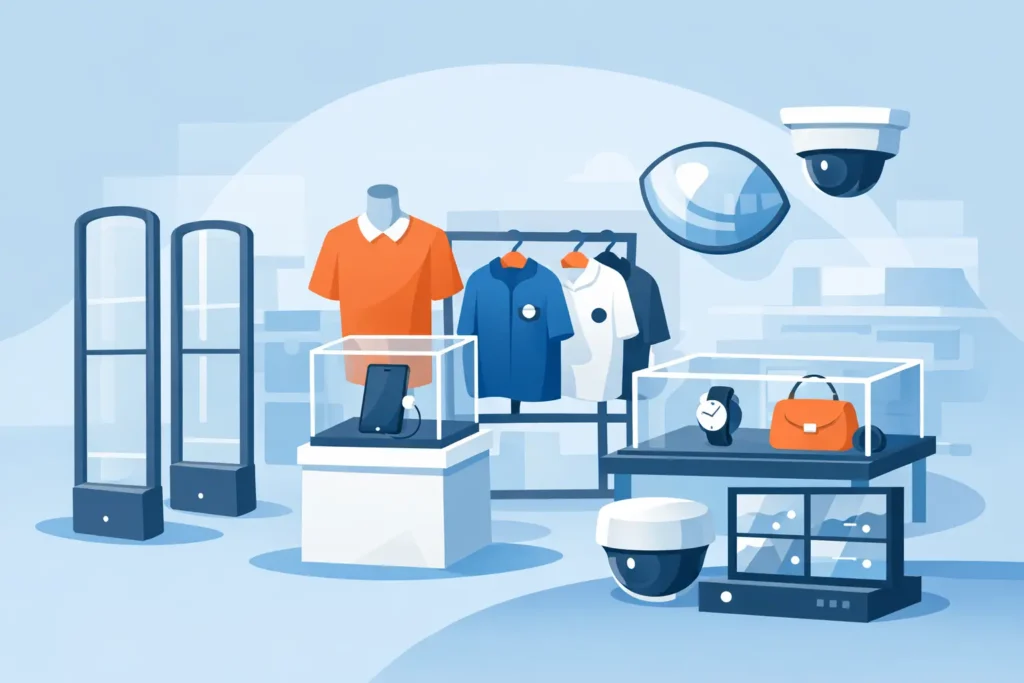
A high-value item displayed near an open aisle can create an immediate loss risk, even in a well-designed store. The best retail security fixtures protect merchandise without making legitimate shoppers feel as though every purchase requires permission. For retailers, fit-out contractors, and procurement teams, the right system balances product access, staff visibility, store traffic, and the value of the inventory on display.
Security is not a single product category. It is a coordinated part of the store fixture plan. A fashion outlet may need discreet hard tags and secure fitting-room processes, while an electronics retailer may require alarmed display stands, tethered cables, and lockable showcases. Supermarkets often benefit most from entrance and exit detection systems, bottle locks, safer cases, and protected shelf displays for targeted products.
What Makes a Retail Security Fixture Effective?
An effective security fixture should reduce opportunity without reducing sales. If a fixture prevents customers from handling a product, it may protect stock but weaken conversion. If it is too easy to bypass, it can create a false sense of security while adding unnecessary cost to the store fit-out.
The practical test is simple: can customers view, compare, and understand the product while staff maintain control over removal and checkout? The answer depends on merchandise value, product size, theft history, location in the store, and the number of employees available on the sales floor.
Durability also matters. Fixtures in busy commercial environments are handled hundreds of times each week. Locking mechanisms, acrylic panels, cables, hooks, brackets, and mounting points should be selected for continuous retail use rather than occasional display use. A poor-quality lock or unstable display stand can cause stock damage, maintenance issues, and a less professional store presentation.
Best Retail Security Fixtures by Application
EAS Pedestals and Security Tags
Electronic Article Surveillance, commonly called EAS, is a primary security measure for apparel, packaged goods, cosmetics, accessories, and many other fast-moving product categories. Pedestals positioned at store exits detect active tags or labels that have not been removed or deactivated at checkout.
Hard tags are a practical choice for apparel, bags, footwear, and textiles because they are reusable and visible. They act as a deterrent while allowing garments to remain accessible on rails, shelves, and feature displays. Adhesive labels are better suited to boxed merchandise, health and beauty products, books, and packaged grocery items.
EAS works best when the system is planned with the checkout process in mind. Staff need the correct detachers or deactivation equipment, and the exit path must be clear enough for the detection zone to operate as intended. Pedestals should not be treated as standalone protection. They are most effective when supported by good store sightlines and consistent cashier procedures.
Locking Display Hooks for High-Theft Accessories
Locking hooks are designed for products displayed on pegboard, slatwall, or gridwall systems. They restrict the removal of merchandise until a staff member releases the mechanism with a key or magnetic detacher. This makes them particularly useful for electronics accessories, batteries, razors, ink cartridges, small tools, gaming accessories, and premium personal care products.
Their main advantage is that they preserve the merchandising format. Products can remain front-facing, organized, and easy to compare while the quantity available to a shopper is controlled. They are often more efficient than placing every small item behind a service counter.
There is a trade-off. A fully locked hook can slow a purchase if staff assistance is not available quickly. For lower-value stock, a limited-capacity hook or standard hook combined with EAS labeling may be the better commercial choice. Use locking hooks selectively where the loss risk justifies the added service requirement.
Safer Cases and Lockable Acrylic Boxes
Safer cases provide visible protection for compact, high-value, or frequently stolen goods. Clear lockable cases allow customers to see the product, packaging, color options, and key specifications while preventing direct removal from the shelf. They are commonly used for cosmetics, fragrances, health products, electronics accessories, and small boxed goods.
For premium retail environments, clear acrylic security boxes can offer a cleaner presentation than heavily enclosed cabinets. They keep the product visible and help maintain a tidy shelf appearance. Cases should be sized accurately so stock does not move excessively inside the enclosure or become difficult for staff to replenish.
This solution is especially useful when only a few SKUs are vulnerable. Instead of changing the security approach for an entire aisle, retailers can protect selected products based on their value, shrinkage data, and availability on the market. Clear product labeling remains essential, as security cases can make it harder for shoppers to read packaging details from a distance.
Locking Showcase Cabinets
Lockable display cabinets are a strong choice for watches, jewelry, mobile devices, collectible products, premium cosmetics, and high-end electronics. They create a defined service-led selling area while presenting stock in an organized and brand-appropriate way.
Glass showcases should not be selected on appearance alone. Buyers should consider lock type, glass thickness, shelf load capacity, access points for staff, cable routing for powered products, and whether the unit needs integrated lighting. A cabinet used for phones or cameras may also require secure brackets, charging access, and product alarm systems.
The downside is reduced self-service. That is often acceptable for premium merchandise where consultation is part of the sale. It is less suitable for items that rely on quick, high-volume customer selection. For those categories, secured open displays may produce better results.
Alarmed Display Stands and Security Tethers
Electronics retailers need customers to interact with devices. Alarmed display stands and security tethers allow shoppers to hold, test, and compare phones, tablets, cameras, headphones, and smart devices while keeping the item attached to the fixture.
These systems can include retractable cables, charging points, adhesive sensor pads, and audible alarms triggered by cable cuts or unauthorized removal. They support a hands-on sales experience, which is valuable where product features must be demonstrated before purchase.
Installation quality is critical. Cables must be routed cleanly, mounts need to suit the device weight, and power connections should be protected from casual tampering. A cluttered demo counter with exposed cords can weaken both security and brand presentation. For high-traffic stores, choose components that can be replaced individually rather than requiring a complete fixture change after minor damage.
Bottle Locks, Shelf Stops, and Controlled Dispensing
Supermarkets, convenience stores, and liquor retailers often face targeted loss in specific categories rather than across the whole store. Bottle locks can secure premium spirits while preserving shelf visibility. Shelf stops and controlled dispensing fixtures can limit the number of units a customer can remove at one time for selected products.
These options are practical where full enclosure would disrupt routine shopping. They keep the category merchandised in its normal location and reduce the chance of rapid bulk removal. They should be applied based on actual shrink patterns, not simply because an item is expensive. Over-securing routine products can make an aisle feel inconvenient and discourage repeat purchase.
Plan Security Fixtures Around the Store Layout
The most effective fixture plan starts with the floor plan, not the catalog. Entry and exit areas require different protection from back-wall displays, service counters, changing rooms, and promotional end caps. Products located near an exit or in a low-visibility corner usually need stronger controls than identical products placed within clear staff sightlines.
Retailers should also consider how shoppers move through the space. A locked cabinet placed behind a busy queue may be secure but difficult for staff to access. An alarmed electronics table positioned at the center of the store can encourage product interaction while keeping devices visible to employees. In grocery layouts, protected products should still fit the shelf planogram and restocking workflow.
Lighting and signage are part of the security plan as well. Clear category signs help shoppers find products without handling multiple items unnecessarily. Good lighting improves product presentation and helps staff identify activity across the sales floor. Security fixtures should look integrated with the store environment, not added as an afterthought.
Choose a System That Staff Can Operate Consistently
A security fixture only performs when staff use it correctly. Detachers must be available at checkout, cabinet keys must be controlled, and employees need a clear process for assisting customers with secured stock. Complicated systems are often bypassed during peak trading periods.
Before placing an order, assess daily operating conditions: who replenishes the stock, who holds keys, how returns are processed, and what happens when a display component needs replacement. Multi-location retailers should prioritize standard systems that can be repeated across stores and supported with consistent operating procedures.
JS Retail Displays supports retailers and commercial project teams in selecting security fixtures that fit both the merchandise and the selling environment. The right choice is rarely the most restrictive one. It is the fixture that protects the products your business cannot afford to lose while keeping the path to purchase clear for the customers you want to serve.