
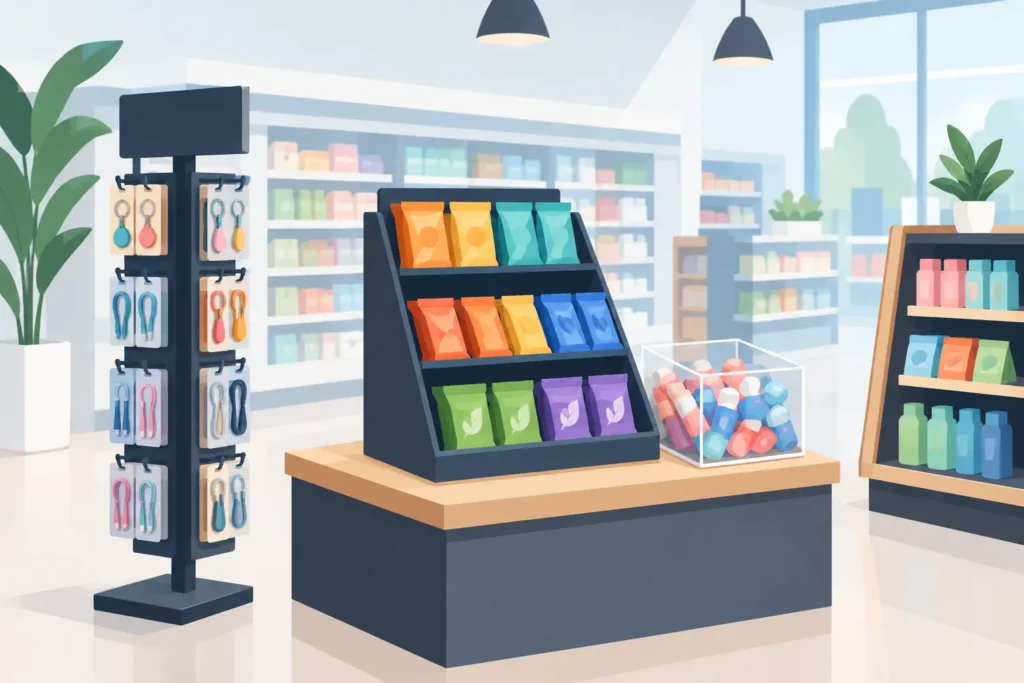
A shopper has already chosen the main purchase. The final few feet of the journey – the checkout queue, endcap, service counter, or aisle transition – are where retail impulse display accessories can turn a small convenience item into an additional sale. The opportunity is real, but only when the display is visible, accessible, properly stocked, and suited to the product.
For supermarket operators, specialty retailers, electronics stores, and fit-out teams, impulse merchandising is not simply about placing more products near the register. It is about using limited selling space with purpose. The right accessories organize small goods, communicate value quickly, protect product presentation, and make replenishment easier for staff.
Where impulse displays earn their space
Impulse items work best when they solve an immediate, low-consideration need. Grocery shoppers may add gum, batteries, snacks, travel-size products, or seasonal treats. In electronics stores, cables, chargers, adapters, screen cleaners, and headphones are natural companions to a larger purchase. Fashion retailers can position socks, belts, care products, and compact accessories where shoppers pause before payment.
The product alone does not create the sale. Placement, sightlines, price point, and fixture design all matter. A display that blocks circulation, looks overfilled, or leaves products difficult to reach can weaken the buying decision. Conversely, a compact, cleanly merchandised unit gives shoppers a quick answer to a need they may not have planned for.
Checkout areas are a proven location, but they are not the only option. Queue rails, shelf ends, promotional tables, counter edges, and power aisles can also perform well. The best location depends on customer dwell time and the item being sold. A queue is suitable for low-priced grab-and-go products, while accessories that need a little more comparison may perform better beside the core category.
Core retail impulse display accessories
A practical impulse program usually combines a fixture with the components that make it easy to shop and maintain. Choosing the right combination starts with the size, weight, packaging, and security needs of the products.
Hook and pegboard components
Display hooks are effective for blister-packed goods, hanging accessories, and lightweight packaged items. They create a clear face-out presentation, allowing customers to see the product and pack quantity without handling every item. Pegboard panels, slatwall systems, and grid panels add flexibility because hook positions can be adjusted as promotions and product ranges change.
For busy stores, hook-based displays should include label holders or data strips directly below the product. Shoppers should not need to search for pricing. Single hooks help maintain product separation, while stronger or locking hook options are more suitable for heavier merchandise or locations where stock control is a concern.
Baskets, bins, and dump displays
Wire baskets, acrylic bins, and compact dump bins are useful for small packaged products that customers can browse quickly. They suit snacks, clearance lines, seasonal items, soft goods, and products with less structured packaging. Their strength is capacity and speed of replenishment.
Their trade-off is presentation control. An overflowing basket can look untidy and obscure product labels, especially where many colors or pack formats are mixed together. Use dividers, small category signs, or separate bins when product identification affects the purchase. Keep the fill level deliberate rather than treating the unit as excess-stock storage.
Shelf talkers, sign holders, and price communication
Impulse decisions are fast, so the message must be faster. Shelf talkers, sign clips, acrylic sign holders, and ticket frames help communicate price, promotion, bundle offers, and product benefits at the point of choice. A simple message such as “Travel Essentials,” “Add a Charging Cable,” or “2 for $5” can give the display a clear reason to buy.
The holder must match the environment. Clear acrylic holders provide a clean finish for counters and premium accessory displays. Clip-on holders work well where offers change frequently. Magnetic or freestanding options can suit metal fixtures, promotional tables, and service counters. Signage should support the product, not hide it. Oversized cards are rarely effective on compact impulse units.
Countertop and freestanding displays
Countertop displays use valuable payment-zone space, making them best for small, high-margin, high-turnover products. Acrylic display stands, tiered risers, card holders, and compact counter bins can bring order to merchandise that might otherwise sit flat and go unnoticed.
Freestanding display units offer more capacity and can be positioned at queue entrances, aisle ends, or beside high-traffic categories. They need a stable base, clear access from more than one side where possible, and a footprint that does not create a safety or circulation issue. In tighter stores, a narrow vertical display often works better than a large floor bin.
Security accessories for high-value add-ons
Impulse does not always mean low value. Electronics accessories, small personal care devices, premium cosmetics, and branded items may require anti-theft measures without losing merchandising appeal. Security hooks, locking displays, tether systems, and protected acrylic cases allow retailers to present products openly while reducing exposure to loss.
The balance is important. If access feels too difficult, shoppers may abandon the purchase rather than request staff assistance. Use higher-security solutions for products with genuine shrink risk, and reserve easy-access fixtures for low-risk lines. A mixed approach often gives the strongest commercial result.
How to choose accessories for the store layout
Before ordering fixtures, assess the selling zone rather than selecting products from a catalog in isolation. Measure the available width, depth, and height. Note where customers queue, stop, turn, and interact with staff. A display that looks suitable on a plan can fail if it sits behind a counter monitor, near a doorway, or outside the shopper’s natural sightline.
Product packaging should guide accessory selection. Hanging packs require the correct hook length and spacing. Loose small goods may need bins with front lips. Boxed items benefit from shelves, stepped risers, or dividers that keep facings upright. If staff replenish the display several times a day, choose a system that can be filled quickly without dismantling signage or moving adjacent stock.
Durability also matters in high-contact areas. Checkout and convenience zones receive constant use from customers and staff. Commercial-grade wire, metal, acrylic, and plastic components should be selected according to load, cleaning requirements, and store conditions. Food retail may prioritize easy-clean surfaces and frequent price changes, while fashion and electronics stores may place greater emphasis on finish quality and branded presentation.
For multi-location programs, consistency is as valuable as flexibility. Standardized accessories make planograms easier to replicate, simplify replenishment, and help maintain a recognizable store presentation across branches. Adjustable hooks, modular baskets, universal ticketing options, and interchangeable sign holders let retailers update assortments without replacing the entire display system.
Merchandising rules that improve conversion
A successful impulse display has one clear job. Avoid placing unrelated products together just because they are small. Pair items with a logical purchase trigger: batteries near electronic accessories, gift bags beside seasonal products, or cleaning wipes near mobile device cases. Relevant adjacency creates a helpful suggestion rather than visual clutter.
Keep the assortment tight. Too much choice can slow down a quick purchase, especially at checkout. A few well-faced options with visible prices are generally more effective than a crowded unit containing every available SKU. Test product combinations by location and review sell-through regularly. What works beside a grocery checkout may not work near a fashion fitting room.
Stock discipline is equally important. Empty hooks, mixed price tickets, damaged packaging, and handwritten signs reduce confidence in the offer. Assign responsibility for daily recovery, confirm that price labels match the product, and set a minimum fill level. These basic actions protect the investment in the display hardware.
Promotions should have a start and end date. Permanent “special offers” quickly become background noise. Rotating seasonal products, travel items, back-to-school essentials, and event-related accessories gives customers a reason to notice the same display zone again.
Build an impulse system, not a product pile
Retail impulse display accessories work hardest when fixture, product, price, and message are planned together. A wire basket may be the right answer for value snacks, while a locking hook and concise product card may be better for a premium electronics add-on. The goal is not to fill every spare surface. It is to create small, reliable selling moments that staff can maintain and customers can shop without hesitation.
For new stores, refurbishments, and chain rollouts, begin with the customer path and the product mission for each impulse zone. Then select display accessories that fit the available space, protect the merchandise where necessary, and make the purchase feel obvious. That approach turns a checkout fixture or aisle end into a dependable part of the store’s sales plan.