
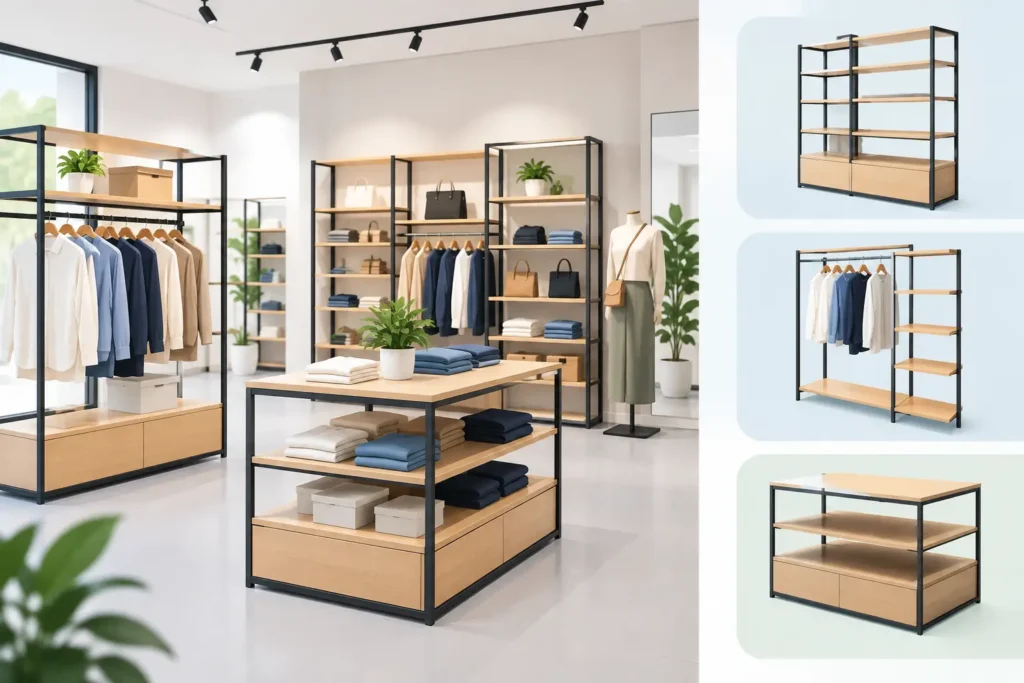
A retail floor rarely stays fixed for long. Seasonal promotions, new product lines, shifting shopper traffic, and store expansion all place pressure on fixtures that were designed for one layout only. Modular retail fixture systems give operators a more practical alternative: display components that can be reconfigured, extended, and reused as merchandising needs change.
For supermarkets, fashion stores, electronics retailers, and multi-location chains, the value is not simply flexibility. The right system helps create cleaner sightlines, use selling space more effectively, maintain consistent presentation, and reduce the cost of repeated store refreshes. The key is selecting modular components that suit the merchandise, the available floor area, and the pace at which the store needs to adapt.
What Makes a Retail Fixture System Modular?
A modular fixture system is built from standardized, compatible parts rather than from single-purpose display units. Uprights, shelves, brackets, rails, hooks, display arms, sign holders, base units, and accessories work together within a defined system. A wall bay can become a freestanding gondola, additional shelves can be added as an assortment grows, and promotional panels can be changed without replacing the full fixture.
This approach differs from custom-built joinery or fixed cabinetry. Permanent fixtures can deliver a highly tailored appearance, especially in premium boutiques or brand environments where the layout is unlikely to change. However, they are less forgiving when product categories move, shelf heights need adjustment, or a new campaign requires prominent display space.
Modularity is most effective when there is a clear system behind it. Components should share consistent dimensions, load ratings, finishes, and connection methods. Mixing unrelated shelving, racks, and accessories may appear flexible at first, but it can lead to uneven presentation, poor fit, and unnecessary replacement costs later.
Why Modular Retail Fixture Systems Matter
Retailers are expected to refresh displays more frequently while keeping disruption to a minimum. A modular system allows staff or fit-out teams to alter the selling environment without beginning each change from zero. Instead of purchasing new fixtures for every assortment update, the operator can redeploy existing bays, shelves, arms, and signage hardware.
This creates practical advantages across daily retail operations. Adjustable shelf positions support products of different heights. Pegboard, slatwall, or grid-based accessories can turn a vertical surface into active merchandising space. Freestanding units can define zones, guide movement, or create seasonal focal points in open floor areas.
For multi-store businesses, standard modular components also make it easier to maintain visual consistency. A chain can apply the same fixture language across locations while adjusting the number of bays or the mix of accessories to fit each site. The result is a recognizable brand presentation without forcing every store into an identical footprint.
There is a financial consideration as well. Modular fixtures can reduce waste during refits because usable components remain in circulation. That does not mean the lowest initial-cost system is always the best choice. Thin materials, weak brackets, and poorly engineered connections can create maintenance issues that outweigh early savings. Commercial-grade construction and reliable replacement availability are central to the long-term value of the system.
Start With the Product, Not the Fixture
A common planning mistake is choosing fixtures based on appearance before defining what they must display. The product should determine the fixture configuration.
Grocery and supermarket environments typically need adjustable shelving, end-cap displays, price communication, and strong load capacity for packaged goods. Product rotation is frequent, so shelf merchandising components and label holders should be easy to replace or reposition. In high-traffic aisles, stable base units and clear access are more valuable than decorative complexity.
Fashion retail requires a different balance. Wall-mounted systems, garment rails, face-out arms, waterfall arms, and folded-garment shelves need to support both capacity and a carefully controlled visual rhythm. Too many rails can make apparel look crowded; too few can leave high-value wall space unproductive. The most effective setup usually combines hanging, shelving, and focused signage rather than relying on a single display method.
Electronics and accessories require security, visibility, and cable management alongside merchandising flexibility. Lockable display cases, secure hooks, acrylic holders, and digital display integration may be required for particular items. Here, a modular system should allow security elements to be added where risk is high without making the entire store feel closed off.
Before specifying a system, document product dimensions, weights, packaging types, replenishment frequency, and the need for customer interaction. A display that looks correct but slows replenishment or cannot carry its intended load will quickly become an operational problem.
Plan the Layout Around Movement and Selling Zones
Fixtures should support how customers move through the store, not merely fill available square footage. Start with the customer path from entry to key categories, then identify the areas that need strong visibility, impulse conversion, guided browsing, or secure service.
A modular layout works well because it can create distinct zones without permanent walls. Gondola shelving can establish grocery aisles. Wall systems can carry core categories around the perimeter. Freestanding racks can introduce seasonal collections or promotional offers. Lower fixtures preserve sightlines across the sales floor, while taller wall bays create vertical capacity where it has less impact on visibility.
Maintain adequate aisle widths for customer comfort, carts, baskets, accessibility, and replenishment. The correct width depends on the retail sector, store size, and local requirements, but compressed aisles are rarely a good use of space. They can discourage browsing and make staff tasks more difficult.
Visual hierarchy matters too. Not every fixture should compete for attention. Use a limited number of feature areas to carry campaign messaging, premium products, or new arrivals. Everyday stock should remain easy to shop, clearly priced, and logically grouped. Sign holders, poster displays, and illuminated signage can reinforce the hierarchy, but they should support the merchandise rather than overwhelm it.
Choose Components That Can Change With Demand
The most useful modular systems include more than shelves. Their real value comes from having accessories that address different product types and promotional needs within the same framework.
For a versatile commercial installation, consider whether the system can accommodate:
- Adjustable shelves and shelf dividers for changing pack sizes and product categories
- Hooks, arms, baskets, and accessory bars for hanging or small packaged goods
- Sign holders, poster frames, and price-ticket solutions for clear communication
- End panels and display extensions for promotions and cross-merchandising
- Lockable or secure display elements for controlled-access products
Not every store needs every component. Over-specifying accessories can create clutter and consume budget that would be better spent on stronger core fixtures. A grocery operator may prioritize shelving capacity and shelf-edge communication, while a fashion retailer may place greater value on flexible hanging arrangements and branded visual displays.
It is also wise to plan for spare parts from the beginning. Replacement brackets, shelf clips, hooks, and sign holders are low-cost items that prevent small breakages from compromising an entire display. For retailers operating multiple locations, a centralized component standard can simplify maintenance and replenishment across the network.
Material, Finish, and Load Capacity Are Commercial Decisions
Fixture selection should account for more than style. Steel systems are widely used for their strength, durability, and suitability for shelving, racks, and heavy-use environments. Powder-coated finishes provide a clean commercial appearance and are available in colors that can align with a store concept. Chrome, wood-effect elements, acrylic accessories, and illuminated components can add visual distinction where appropriate.
The right finish depends on the environment. A value grocery store may require durable, easy-to-clean shelving that withstands carts and repeated restocking. A premium fashion outlet may use metal framing with timber shelves to create a warmer presentation. Electronics stores may combine metal structures with glass or acrylic displays to preserve visibility while supporting security measures.
Always confirm load capacity at the shelf, bracket, and bay level. Heavy products concentrated on one shelf can create deflection, instability, or premature wear even if the overall unit appears substantial. Load ratings should reflect actual merchandising conditions, including the possibility that staff will place stock unevenly during replenishment.
Build for Rollout, Reconfiguration, and Replacement
A fixture system should be judged by what happens after installation. Can additional bays be supplied in matching finishes? Are accessories available when new categories are introduced? Can the same system be used in a smaller branch, a larger flagship location, or a temporary promotional area?
These questions are especially relevant for retailers and fit-out contractors managing phased projects. Standardized modular components can improve procurement control, speed up repeat installations, and reduce the risk of inconsistent store presentation. They also make future changes more predictable because the connection points, dimensions, and finishes have already been established.
For major projects, work from a fixture schedule rather than ordering display items individually. The schedule should identify each fixture type, dimensions, finish, load requirement, accessory set, signage requirement, and intended location. This helps prevent gaps between design intent and site delivery, particularly where shelving, security systems, POP displays, and branded signage must work together.
JS Retail Displays supports this practical approach by helping commercial buyers match fixture categories to layout needs, product presentation, and operational requirements. The objective is not to add fixtures for their own sake, but to create a selling environment that is easier to manage and more effective for shoppers.
A well-chosen modular system should give a store room to respond. When the next campaign, category change, or site expansion arrives, the best fixtures are the ones that can be rearranged with confidence rather than replaced under pressure.