
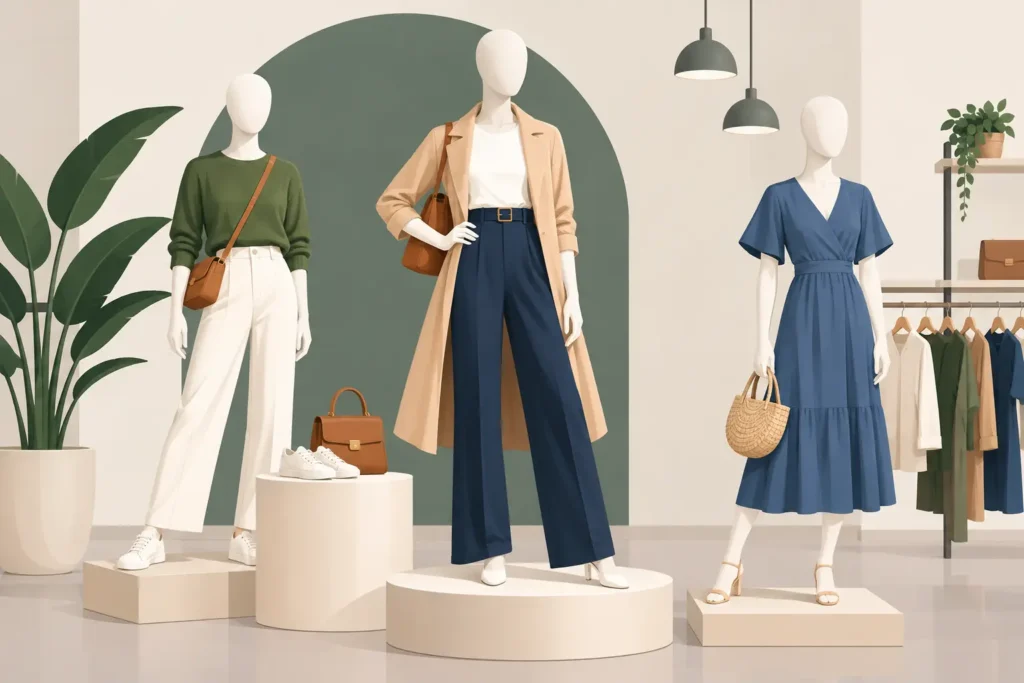
A mannequin standing at the entrance of a fashion store does more than wear an outfit. It establishes a visual standard before a shopper reaches the first fixture. Well-chosen mannequin displays show how garments fit, encourage outfit-based purchasing, and give new collections the presence they need on a busy sales floor. Poorly chosen forms, on the other hand, can make premium merchandise look awkward, hide key product details, or consume valuable floor space.
For apparel retailers, department stores, boutiques, and fit-out teams, mannequins are working merchandising fixtures. The right specification depends on the product category, store layout, display frequency, and brand image. A practical selection process helps ensure these displays support commercial performance rather than becoming static decoration.
Start With the Merchandise, Not the Mannequin
The first decision is whether the display must present a complete look, a single category, or a product detail. Full-body mannequins are effective for dresses, suits, uniforms, outerwear, and coordinated collections because they show proportion from head to toe. They are particularly valuable when a retailer wants to sell multiple items together, such as a jacket, shirt, pants, belt, and footwear.
Torso forms and dress forms provide a more compact option for shirts, blouses, jackets, knitwear, and accessories. They allow retailers to repeat a presentation across walls, tables, or shelving zones without making the space feel crowded. Lower-body forms can be useful for jeans, skirts, shorts, and hosiery, while leg forms are suited to footwear and sock displays.
This choice should follow the merchandise story. A formalwear department usually benefits from full forms that communicate fit and occasion. A folded denim table may need only a torso or lower-body form to break up the display and show styling possibilities. Using full mannequins everywhere can reduce impact and increase visual clutter.
Choose Mannequin Displays for the Store Environment
Mannequin displays need to work with the store’s finishes, lighting, fixtures, and traffic patterns. A sleek, high-gloss form may suit a contemporary flagship environment, while matte white, black, or neutral skin-tone finishes tend to work well across a broader range of retail concepts. Abstract or headless mannequins create a clean, product-forward presentation. Realistic facial features can be appropriate for specialty fashion, sportswear, or lifestyle displays where a more human presentation supports the brand.
Color is not simply an aesthetic decision. White and light finishes reflect light and can help garments stand out in a bright store. Black forms create contrast for pale or vibrant apparel but may lose definition against dark walls. Transparent acrylic mannequins can be useful where a retailer wants a lighter visual effect, although they may show fingerprints and require more frequent cleaning.
For high-traffic commercial environments, durability matters as much as appearance. Fiberglass mannequins are widely used for their strength, finish options, and professional presentation. Plastic forms can offer a lighter, economical alternative for promotional programs or frequent rollouts. Fabric-covered forms bring texture and a more traditional feel, but they require care in areas exposed to dust, spills, or heavy customer contact.
Pose Determines What Shoppers Notice
A mannequin’s pose directs attention. A straight, neutral stance is versatile and efficient for regular merchandise changes. It works well for tailored apparel, uniforms, and stores that need a consistent presentation across multiple departments or locations. Dynamic poses can add energy to sportswear, casualwear, youth fashion, and active lifestyle collections.
The trade-off is operational. Highly posed mannequins can make dressing more time-consuming, particularly with fitted garments, narrow sleeves, or layered outfits. They may also require more clearance around the display, which can be difficult in smaller stores. For chain retailers and fit-out contractors managing repeat installations, modular mannequins with removable arms, hands, heads, and legs often simplify transport, assembly, and seasonal resets.
Consider the viewing angle as well. A mannequin placed near an entrance is commonly seen from a distance and should have a clear silhouette. A form on a wall display is viewed closer, so garment texture, accessories, and styling details become more important. Avoid poses that block logos, graphic prints, pockets, or other selling features.
Base and Support Options Matter
The base is often overlooked until installation day. A stable glass, metal, or painted base gives the display a finished appearance and helps prevent movement in busy areas. Foot and calf supports affect how shoes, pants, and long dresses can be displayed. Some support systems are easier to conceal than others, which matters for visual merchandising standards.
For window displays, choose bases and supports that remain stable under repeated adjustments and can accommodate the planned footwear. For sales-floor use, ensure the footprint does not create a trip risk or obstruct aisle circulation. A fixture may look compact in a product image but require more practical clearance once dressed and positioned.
Plan Placement Around Customer Flow
Mannequins are most effective when they create visual stops at the right points in the customer journey. Storefront windows and entrance zones are obvious locations, but they are not the only ones. Placing a dressed form at the end of a gondola, beside a new-arrivals fixture, or near a fitting room can connect apparel categories and prompt additional purchases.
The best location depends on what the store needs to achieve. A window mannequin should communicate the season or campaign quickly to passersby. An entrance display should introduce the current collection without creating congestion. A mannequin near a wall of apparel should guide the shopper toward specific items that are available nearby, not present a look that cannot be easily found.
Maintain sightlines to signage, promotional graphics, and key merchandise. If a mannequin blocks a category sign or narrows a main aisle, it is working against the store layout. In compact retail spaces, torso forms mounted on walls or positioned on tables may provide the same styling benefit with less demand on floor area.
Build a Consistent Styling Program
The value of mannequin displays depends on regular updates. A form dressed in outdated apparel quickly signals that a store is not actively managed. Align mannequin changes with deliveries, campaigns, seasonal transitions, and promotional periods. This does not always require a complete remerchandising project. Changing one hero layer, accessory, or color story can refresh a presentation and support a new message.
Consistency is especially important for multi-location retailers. Establish standards for mannequin finish, pose family, outfit styling, accessory use, and placement zones. These guidelines help stores maintain the intended brand presentation while allowing local teams to adapt to available stock. They also make it easier for procurement and fit-out partners to specify the correct quantities and types of forms for each format.
When planning a new store or refurbishment, calculate mannequin requirements by zone rather than buying a single assortment without context. Entry displays, windows, feature walls, fitting-room areas, and promotional tables may each require different forms. This approach prevents overbuying large full-body mannequins when compact torso displays would provide better coverage.
Specify for Long-Term Retail Use
Commercial display fixtures should be selected with maintenance and replacement in mind. Ask how easily the mannequin can be cleaned, whether parts are replaceable, how it is packed for transport, and whether the finish will withstand regular handling. Retail teams need forms that can be dressed quickly and moved safely without disrupting trading hours.
For projects with a defined visual identity, matching the mannequin style to other retail display components creates a more controlled environment. Signage, shelving, acrylic holders, lighting, and garment fixtures all affect how the mannequin is perceived. A premium outfit on a poorly organized fixture will not deliver the same result as a coordinated presentation.
JS Retail Displays supports retailers and project teams with mannequin and fashion display options selected for practical merchandising needs. The objective is not to fill a store with figures. It is to use the right display form in the right location, so shoppers can see the product, understand the outfit, and move naturally toward a purchase.
Treat mannequins as part of the selling plan, not as a final decorative addition. When the form, pose, finish, and placement reflect the merchandise and the space, each display gives the collection a clearer reason to be noticed.