
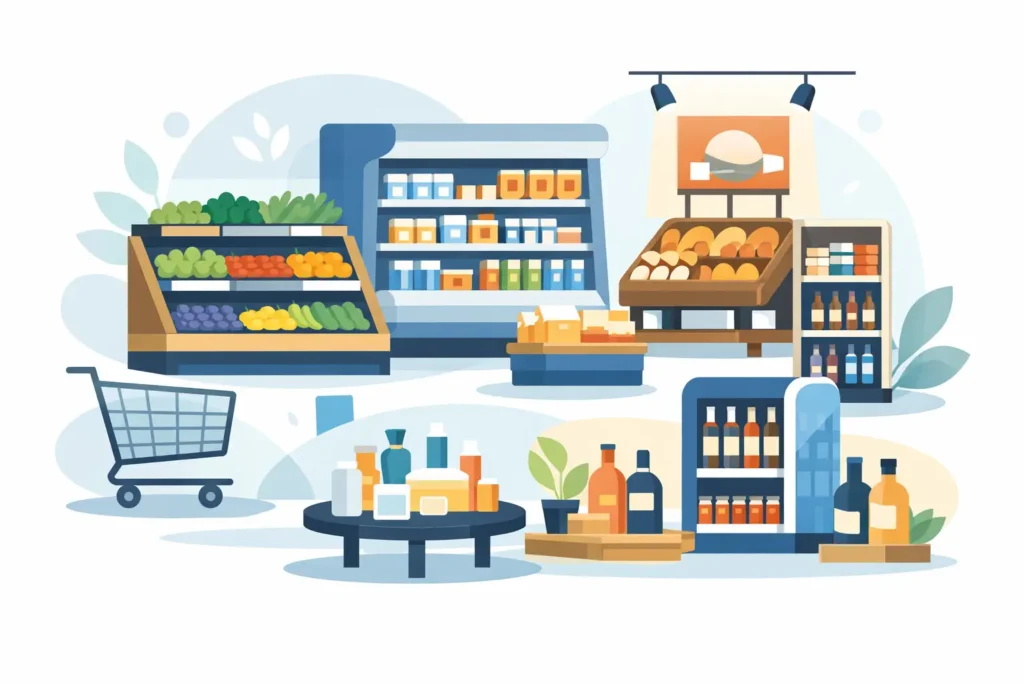
A supermarket can lose sales in very ordinary places – the endcap that carries the wrong mix, the checkout lane packed with low-margin items, or the produce table that looks full by 9 a.m. and picked over by noon. The best supermarket display ideas are not just visual upgrades. They are working tools for traffic flow, product visibility, stock rotation, and basket growth.
For supermarket operators, fit-out contractors, and retail project teams, the right display strategy has to do more than look organized. It needs to support replenishment, handle daily wear, fit category behavior, and make shopping easier at speed. That is where display planning becomes a commercial decision, not simply a design choice.
What makes the best supermarket display ideas work
The most effective supermarket displays balance three things: visibility, access, and control. Products need to be easy to see from a distance, simple to reach at shelf level, and presented in a way that keeps the area tidy throughout the trading day.
That sounds straightforward, but every category behaves differently. Fresh produce benefits from abundance and quick refilling. Packaged grocery performs best with clear shelf organization and strong price communication. Promotional zones need high impact without creating bottlenecks. A display that works well in beverages may fail completely in bakery or health and beauty.
This is why the best results usually come from combining fixture type, merchandising accessories, and signage rather than relying on one display unit alone.
1. Endcap displays for high-margin and seasonal lines
Endcaps remain one of the strongest selling positions in a supermarket because they interrupt routine shopping patterns. Customers scanning a central aisle often notice the endcap before they look down the bay itself.
The strongest use of endcaps is not to treat them as overflow space. They perform better when they carry one clear message. That might be seasonal confectionery, cooking staples tied to a holiday, or premium grocery items with a strong promotional price. When too many SKUs compete in the same endcap, the display loses urgency.
From an operational standpoint, endcaps should be easy to replenish and supported by price holders or promotional sign frames that stay aligned. If the display is meant to move volume, the structure needs enough capacity to avoid looking depleted halfway through the day.
2. Produce tables that create freshness and abundance
Fresh departments often set the tone for the entire store. Well-planned produce displays help communicate freshness, quality, and value within seconds of entry.
Flat and tiered produce tables work best when they give the impression of abundance without making restocking difficult. Tiering improves visibility and allows more categories to be seen from a distance, while bin dividers and edge control help maintain order as shoppers handle the merchandise. The trade-off is that a denser presentation can increase refill labor if the layout is too fragmented.
For stores with limited floor area, modular produce fixtures are usually the better option. They allow teams to reconfigure space by season and support changes in assortment without replacing the full display system.
3. Gondola shelving that does more than hold stock
Gondola shelving is a standard supermarket fixture, but it is often underused as a display system. Good gondola planning improves category clarity, shopper navigation, and facing density at the same time.
The difference is usually in the details. Shelf dividers, pusher systems, data strips, and sign holders help maintain a clean front-facing presentation and reduce the labor needed to keep shelves sale-ready. This matters most in high-traffic categories such as snacks, dairy-adjacent packaged goods, personal care, and convenience grocery.
For supermarkets managing mixed pack sizes, adjustable shelving is critical. If shelf heights are fixed too tightly, teams either waste vertical space or struggle with poor product fit. The best supermarket display ideas for center store categories usually start with flexible shelving infrastructure rather than decorative add-ons.
4. Cross-merchandising displays that increase basket size
Cross-merchandising works because customers do not always shop by department logic. They shop by meal, occasion, or need state. A pasta section with sauces, grated cheese, and seasoning nearby is easier to convert than a category layout that forces multiple aisle visits.
This does not require large secondary fixtures. In many stores, clip strips, side-mounted holders, dump bins, or small freestanding displays are enough to create useful add-on sales opportunities. The key is relevance. Batteries near toys make sense. Random impulse products near cleaning chemicals usually do not.
Execution matters here. If cross-merchandising looks temporary or cluttered, it can reduce trust in the category. The fixture should feel intentional and integrated into the store environment.
5. Checkout displays designed for speed and impulse
Checkout merchandising still matters, but the old model of crowding every inch of the lane with low-value impulse stock is less effective than it used to be. Customers want convenience, but they also want a clean and efficient exit experience.
The better approach is selective checkout display planning. Use compact racks, acrylic holders, and clearly segmented shelving for a focused range such as confectionery, drinks, travel-size essentials, or promotional convenience items. Product choice should reflect the store profile. A neighborhood grocery may perform well with snacks and household top-ups, while a premium format may do better with specialty treats or branded convenience items.
There is a clear trade-off. More display density can increase impulse opportunity, but it can also make the lane feel cramped and harder to maintain. In checkout zones, restraint often sells better than excess.
6. Dump bins for promotional volume without wasting space
Dump bins are practical, fast to deploy, and highly effective for promotional items, packaged snacks, seasonal products, and clearance lines. They work because they signal value and urgency.
That said, not every dump bin performs well. Poorly placed units can interrupt customer flow, especially near aisle transitions or store entrances. The best use is in wider circulation zones where customers can pause without blocking traffic.
Material and build quality matter more than many buyers expect. In a busy supermarket, bins must handle repeated restocking, customer handling, and movement across the sales floor. A weak unit may be cheaper upfront but costly in presentation and replacement terms.
7. Refrigerated and ambient display coordination
Some of the best supermarket display ideas come from how ambient and chilled categories work together. Meal solution merchandising, grab-and-go zones, and convenience-led front-of-store layouts benefit from a coordinated approach across fixture types.
For example, placing ambient snacks, sauces, bakery packs, or utensils next to refrigerated drinks or ready meals can improve conversion. The display system should support that journey visually, with matching sign logic, clear product separation, and consistent shelf communication.
This is especially useful in compact stores and modern grocery formats where quick missions drive a high share of visits. In these environments, display planning should reduce decision time rather than add complexity.
8. Digital and illuminated signage for key promotional zones
Traditional shelf communication still does most of the work in supermarkets, but digital displays and illuminated sign elements can add value in the right locations. Entrance zones, fresh departments, service counters, and seasonal promotional areas are the most practical places to use them.
The reason is simple. These are high-visibility points where messaging needs to stand out at a distance. Digital screens can support campaign rotation, while illuminated signage helps reinforce wayfinding and brand presentation.
However, these solutions work best when used selectively. Too much screen content can create visual noise, and poorly positioned signage can compete with product rather than support it. Commercially, the strongest result comes when signage highlights categories or promotions that already have a solid display foundation.
9. Shelf-edge communication that improves conversion
A supermarket display is rarely judged on fixture alone. Shelf-edge communication often determines whether a customer actually buys. Price ticket holders, shelf talkers, promotional tags, and category strips help customers process information quickly.
This is particularly important in value-sensitive categories where price comparison happens in seconds. Clean shelf-edge systems also reduce the visual inconsistency that appears when stores rely on mixed paper labels or improvised signage.
For multi-location operators, standardized shelf communication improves both execution and brand consistency. It is a small component with a large operational effect.
10. Modular displays for stores that need flexibility
Many supermarket operators are working with changing assortments, promotional calendars, and mixed-format stores. Fixed display plans can become a limitation very quickly. Modular display systems give project teams more room to adapt layouts without major reinvestment.
This is where a supplier with broad category coverage becomes valuable. A combination of shelving, poster holders, acrylic organizers, promotional stands, and merchandising accessories allows stores to adjust by department and campaign rather than forcing one fixture type across every zone.
For contractors and procurement teams, modularity also supports phased rollouts and easier specification across multiple sites. JS Retail Displays serves this need well because the product range covers both core supermarket fixtures and the accessory systems that help those fixtures perform properly on the floor.
Choosing the right idea for your store format
Not every display trend belongs in every supermarket. A hypermarket has different circulation and replenishment demands than a compact urban grocery. A high-promotion discount store needs stronger volume displays than a premium food hall. Security requirements, cleaning routines, load capacity, and staff availability all affect what will work in practice.
That is why the best supermarket display ideas should always be matched to category role and store operations. If a display looks strong on opening day but is difficult to refill, keep clean, or maintain across peak hours, it is not the right solution. Good display planning earns its value over time, on ordinary trading days, not just in store launch photos.
The most effective supermarket environments are built on practical choices that make products easier to notice, easier to shop, and easier to manage. When display systems support those three outcomes, sales improvement usually follows.