
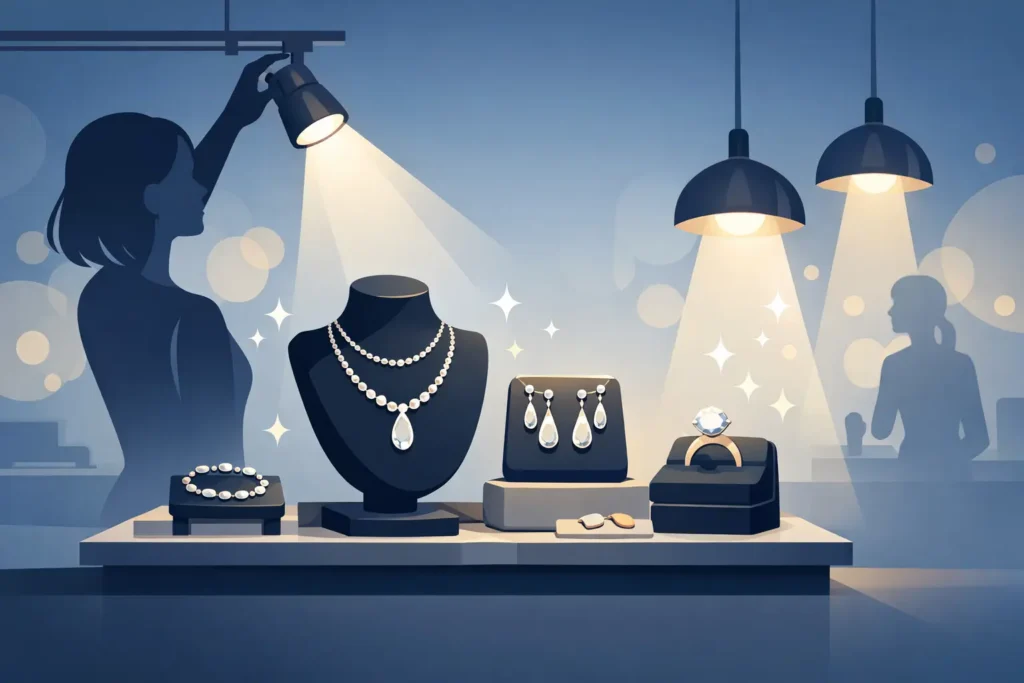
A diamond can look flat, gold can appear dull, and colored stones can lose their character when a display case is lit like a general retail shelf. Learning how to light jewelry displays is not simply a decorative decision. It affects perceived value, product visibility, shopper confidence, staff presentation, and the overall quality of the store environment.
For jewelry retailers, lighting must make merchandise appealing without creating glare on glass, heat inside the case, or misleading color. The right approach combines suitable LED specifications, controlled beam placement, and a fixture layout designed around the jewelry being sold.
Start With the Jewelry, Not the Light Fixture
A lighting plan should begin with the product category and display format. Fine diamond jewelry, gold collections, watches, fashion jewelry, and gemstone pieces do not all respond to light in the same way.
Diamonds benefit from a combination of bright white light and small points of contrast that encourage sparkle. Gold usually performs well under warm or neutral-white lighting because it keeps the metal rich rather than pale. Silver, platinum, and white gold generally need clean, neutral light to maintain a crisp appearance. Colored gemstones require strong color rendering so customers can see their actual tone, saturation, and detail.
The display construction also matters. Glass countertop cases, wall-mounted showcases, open plinths, and locked tower displays each create different reflection and shadow challenges. A fitting that works in an open jewelry bay may produce distracting reflections when installed inside a glazed case.
Before selecting lighting, review the merchandise mix, case dimensions, shelf depth, background materials, and viewing height. This prevents a common mistake: installing a visually impressive light source that does not properly illuminate the products customers are expected to examine.
Choose LED Lighting for Commercial Jewelry Cases
LED lighting is the standard choice for most modern jewelry displays. It uses less energy than traditional halogen lighting, produces less heat, has a longer service life, and is available in compact formats suited to narrow case profiles.
Low heat output is particularly valuable in enclosed showcases. Excessive heat can make the customer experience uncomfortable at the counter, increase the load on store air conditioning, and create avoidable stress for sensitive display materials. LEDs also allow retailers to conceal lighting more easily under shelves, within vertical case channels, or behind slim aluminum profiles.
However, not every LED is suitable for jewelry retail. Cheap fittings can create uneven color, visible diode spotting, flicker, or a harsh blue cast. Commercial-grade LED strips, spotlights, and linear profiles should be selected for consistent output, suitable color quality, and reliable performance during long store operating hours.
Use High Color Rendering
Color Rendering Index, or CRI, indicates how accurately a light source reveals colors compared with natural light. For jewelry displays, specify a CRI of 90 or above wherever possible.
A high-CRI light helps shoppers see the true color of gemstones, metal finishes, enamel, and pearl surfaces. This is especially important when a customer is comparing pieces in-store before making a high-value purchase. Poor color rendering can make merchandise look less refined and can create a mismatch between its appearance in the showroom and in daylight.
For premium jewelry counters, CRI should be treated as a product presentation requirement, not an optional upgrade.
Select the Right Color Temperature
Color temperature is measured in Kelvin and has a major effect on how jewelry is perceived. There is no single setting that suits every store, but most jewelry displays perform well within the 3000K to 4000K range.
Warm white light around 3000K is often effective for yellow gold, rose gold, and a more luxurious boutique atmosphere. Neutral white light between 3500K and 4000K provides a balanced look for mixed collections, diamonds, silver, and watches. Cooler lighting above 5000K can make white metals appear sharp, but it may feel clinical and can reduce the warmth of gold or fashion-oriented pieces.
Stores with a broad product assortment may use a neutral white base lighting system and introduce focused accent lighting where additional brilliance is needed. The key is consistency. A ring should not look warm in one case and cold in the next simply because different lamps were installed at different times.
Layer the Light Inside and Around the Case
The best jewelry presentation rarely comes from one overhead fixture. General store lighting establishes a comfortable shopping environment, but it should not be expected to perform the detailed work inside a display case.
Use layered lighting. Ambient light supports circulation and makes the store feel open. Case lighting reveals the jewelry. Accent lighting directs attention to feature collections, hero products, new arrivals, or premium branded zones.
Inside glass cases, concealed linear LEDs mounted at the front underside of each shelf can cast light downward onto merchandise. Vertical LED channels at the side of a case can reduce shadowing and give even illumination across several shelves. Small adjustable spotlights are useful for top displays, bust forms, watch stands, and statement pieces that need extra emphasis.
Avoid placing strong lights directly behind the customer-facing glass. This arrangement often creates mirror-like reflections, making it harder for shoppers to see the product. Light should be aimed at the jewelry and display surface, not at the viewer.
Control Reflections and Glare
Glass is necessary for security and cleanliness, but it is also the biggest lighting obstacle in many jewelry displays. Glare can hide detail, create bright hot spots, and force customers to change position just to see a ring or pendant clearly.
Use diffused linear lighting for broad, even coverage and narrow-beam spotlights only where controlled sparkle is needed. Recessed channels, frosted lenses, and properly angled fittings help keep the light source out of the customer’s direct line of sight.
The finish inside the case also affects reflections. Bright white back panels increase perceived brightness but can create more glare if the lighting is poorly aimed. Dark velvet, matte fabric, and low-reflective finishes create stronger contrast, helping diamonds and polished metals stand out. The best choice depends on the collection and brand presentation, but shiny case interiors should generally be avoided.
Set Brightness for Detail, Not Drama
Jewelry needs more light than many retail products because pieces are small and detailed. Yet overlighting can make a case uncomfortable to view and can flatten the difference between ordinary items and premium pieces.
A useful target is bright, even illumination inside the case with focused highlights on selected products. As a general commercial guideline, jewelry case lighting often falls in the range of 1,000 to 2,000 lux at product level. Premium diamond displays may use higher accent levels, provided reflections and glare remain controlled.
Brightness should be tested from the customer’s standing position, not only while the case is open. Ask staff to place representative merchandise in the display, close the glass, and view it from several angles. Check how the pieces look at different times of day, particularly near storefront windows where daylight changes the visual balance.
Use Lighting Controls to Protect Presentation
Dimming controls are practical in jewelry retail because the required lighting level can change throughout the day. Morning cleaning, daytime sales activity, evening window presentation, and after-hours security conditions may each require a different setting.
Dimmable drivers and compatible LED fittings give store teams more flexibility than fixed-output systems. They also help maintain the intended visual standard as display layouts change. A feature case filled with reflective diamond jewelry may need less output than the same case used later for darker gemstone pieces.
For multi-location retailers, standardized lighting specifications and control settings support consistent presentation across branches. This is particularly useful where brand identity depends on a recognizable in-store look.
Plan for Installation, Maintenance, and Security
Lighting should be integrated with the case design before fabrication or fit-out whenever possible. Retrofitting can work, but it may leave visible cables, limit fixture placement, or reduce usable shelf space.
Specify concealed wiring routes, accessible drivers, ventilation where required, and service access for future replacement. In locked jewelry showcases, fittings must not interfere with locks, security sensors, sliding doors, or staff access. Electrical components should be installed professionally and selected for the operating conditions of the display.
Maintenance matters because even a high-quality lighting system loses impact when lenses collect dust or case interiors show fingerprints. Include regular cleaning of glass, diffusers, and display surfaces in store operating procedures. Replace failed fittings promptly so one dark shelf does not weaken the presentation of an entire collection.
For commercial fit-outs, JS Retail Displays can support the selection of display and presentation components that work together as a complete jewelry merchandising environment. The objective is not simply to add light, but to create cases that present valuable merchandise clearly, securely, and consistently.
A well-lit jewelry display should make the customer pause, look closer, and feel confident about what they see. Treat lighting as part of the sales fixture itself, and every case can work harder for the merchandise it protects.