
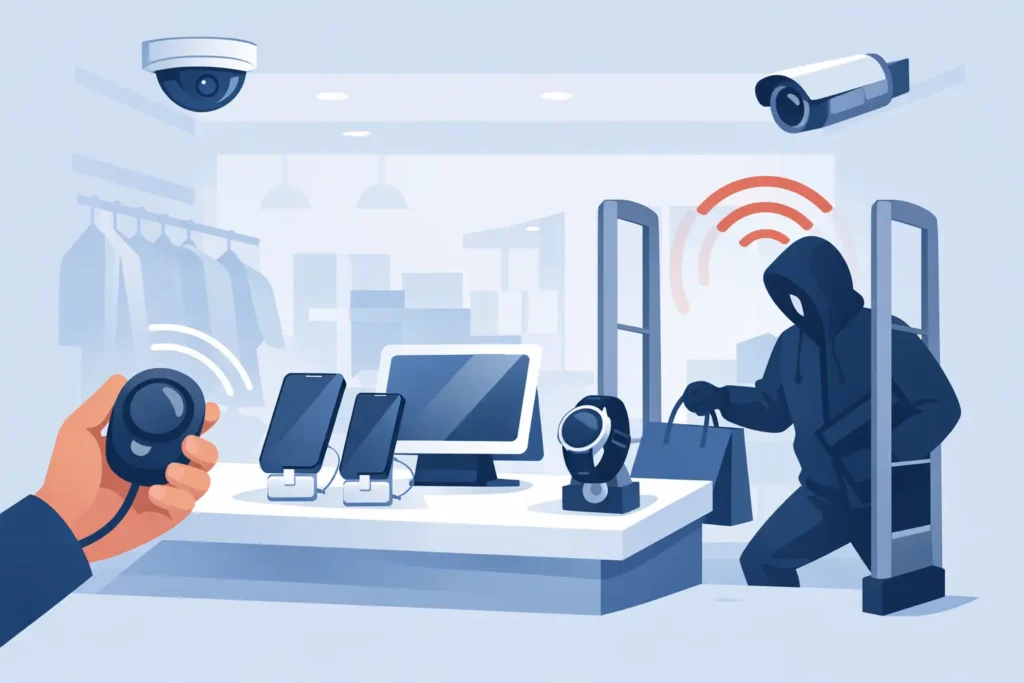
A locked cabinet can reduce shrink, but it can also reduce sales. That is the daily trade-off many retailers face when presenting phones, accessories, beauty devices, liquor, power tools, and other high-value merchandise. Retail anti theft display systems solve that problem when they are selected correctly – protecting stock without turning the shopping experience into a waiting game.
For store owners, fit-out contractors, and procurement teams, the real question is not whether security matters. It does. The question is which display approach gives you the right balance of access, visibility, durability, and control for your product category and store format. A system that works in consumer electronics may be excessive for cosmetics, while a low-profile fixture suited to branded accessories may not be strong enough for busy supermarket environments.
What retail anti theft display systems are designed to do
At a practical level, retail anti theft display systems are display fixtures and security components used together to deter theft while keeping merchandise visible and sellable. They can include secured display stands, tethered product holders, locked showcases, alarmed mounts, sensor-based fixtures, and integrated merchandising hardware built for live product presentation.
The best systems do more than stop opportunistic theft. They support planograms, maintain a clean display line, and allow staff to manage customer interaction without constant friction. In high-traffic stores, this matters. If a product is too exposed, it becomes a target. If it is too restricted, customers move on.
That is why anti-theft display planning should sit between security strategy and visual merchandising, not in a separate silo. Security hardware that ignores presentation usually looks improvised. Presentation fixtures that ignore risk usually create losses.
Where anti-theft displays add the most value
Some categories need more protection than others, but the pattern is consistent. Retailers get the strongest return from anti-theft display systems where products are compact, valuable, easy to conceal, and frequently handled.
Electronics is the obvious example. Phones, tablets, earbuds, smartwatches, chargers, and gaming accessories benefit from tethered or alarmed displays that allow hands-on experience without giving shoppers an easy exit path. In these categories, touching the product often drives conversion, so fully locking everything away can hurt performance.
Beauty and personal care can be just as vulnerable, especially with premium tools and gift sets. Here, a lower-visibility security approach is often preferable because presentation quality is part of the sale. The fixture needs to protect stock while preserving brand appeal.
Supermarkets and convenience formats face a different challenge. Theft risk often involves repeat grab-and-go behavior rather than one-off high-ticket loss. For alcohol, tobacco-adjacent items, small electronics, and razor products, enclosed or controlled-access displays may make more commercial sense than open interactive systems.
Fashion and accessories stores also need careful fixture selection. Bags, watches, sunglasses, and branded accessories need display systems that support visual standards while limiting easy removal. In premium environments, visible over-securing can cheapen the presentation, so fixture finish and hardware integration matter.
Choosing the right system depends on the product, not just the risk
A common purchasing mistake is to start with the strongest possible deterrent and work backward. That approach can lead to oversized cases, poor sightlines, awkward shopper access, and frustrated staff. A better starting point is to assess how the product is meant to sell.
If demonstration is essential, the display should allow safe handling. If stock visibility is the main objective, a secured acrylic case or controlled-access shelf may be enough. If the item is frequently replenished, staff-friendly opening and locking methods become important. If the product sits in a high-impact promotional zone, the fixture also needs to support graphics, lighting, and brand blocking.
This is where specification matters more than many buyers expect. Cable strength, alarm type, lock quality, base stability, acrylic thickness, mounting method, and power integration all affect performance. A display system may look suitable in a catalog photo and still fail in store conditions if it cannot handle traffic volume, cleaning routines, or repeated staff use.
Retail anti theft display systems for different store environments
The same product can require different protection based on store format. A shopping mall electronics store, an airport retail space, and a neighborhood supermarket may all carry similar high-value items, but the fixture requirements will differ.
In a premium branded store, the display often needs a refined finish with discreet security. Exposed cables, bulky lockboxes, or inconsistent fixture colors can undermine the brand environment. In these settings, anti-theft hardware should feel integrated into the display rather than added after the fact.
In a value-led or high-volume retail space, durability and replacement efficiency may carry more weight. Fixtures need to withstand heavier handling, quicker restocking, and constant customer traffic. Security also has to be easy for frontline teams to manage. If staff bypass the system because it is inconvenient, the specification has failed regardless of how advanced it looks.
For multi-location rollouts, standardization becomes another factor. Buyers often need anti-theft displays that can be repeated across branches with consistent sizing, mounting, and visual presentation. That makes procurement simpler and helps maintain a more uniform store experience.
What good anti-theft display planning looks like
The strongest results usually come from planning anti-theft fixtures early in the store design process. Waiting until the end often leads to compromise – forcing security hardware onto displays that were never designed for it.
Early planning allows teams to match the fixture type to the category, traffic pattern, and display purpose. It also helps resolve practical questions before installation. Does the display need power? Will staff access it from the rear or front? Is it freestanding, wall-mounted, or counter-mounted? Does it need to accommodate promotional graphics or branded messaging?
This stage is also where retailers should think about stock depth and replenishment. A display that protects a single sample well may still fail operationally if reserve stock is poorly stored or if staff need excessive time to open and close the fixture during busy periods.
For project stakeholders, there is also a coordination benefit. When anti-theft systems are specified alongside shelving, counters, acrylic accessories, digital screens, and POP elements, the retail environment works as one complete system. That is often more efficient than mixing separate suppliers with different standards, lead times, and finish quality.
The trade-offs buyers should weigh before ordering
There is no universal best option. Every anti-theft display decision involves trade-offs.
Higher security usually means lower immediacy of access. More open interaction usually means greater fixture complexity. Premium materials can improve presentation but increase budget. Compact fixtures may save floor space but reduce stock-holding capacity. Alarmed systems may improve deterrence but require more setup and maintenance discipline.
That does not mean the decision is complicated for its own sake. It means buyers should be clear about the primary objective. If the goal is to reduce direct theft in a known problem category, stronger control may be justified. If the goal is to protect samples while encouraging product trial, a more open display with tethered security may deliver better sales performance.
The right supplier should be able to discuss these trade-offs in practical terms, not just present a list of products. For businesses sourcing across electronics, grocery, beauty, or fashion, that category-specific guidance can save both time and rework.
Why fixture quality matters as much as security features
Poorly made anti-theft displays create their own problems. Weak joins, unstable bases, low-grade acrylic, unreliable locks, or exposed wiring quickly become maintenance issues. They also affect shopper perception. If the display looks temporary or damaged, the product can appear lower in value.
Commercial buyers should look beyond the headline feature and assess the fixture as a whole. Finish consistency, mounting integrity, clean fabrication, and compatibility with the wider store environment all matter. A good anti-theft display should still perform as a retail display.
For this reason, many retailers prefer to source through a partner that understands both merchandising and protection. JS Retail Displays works in that space by supporting buyers with display systems that address security, visibility, and store presentation together rather than as separate decisions.
The best anti-theft display is not the one that locks everything down. It is the one that lets the right customer engage with the product while making theft harder, slower, and less likely. When that balance is right, the fixture protects margin without getting in the way of selling.