
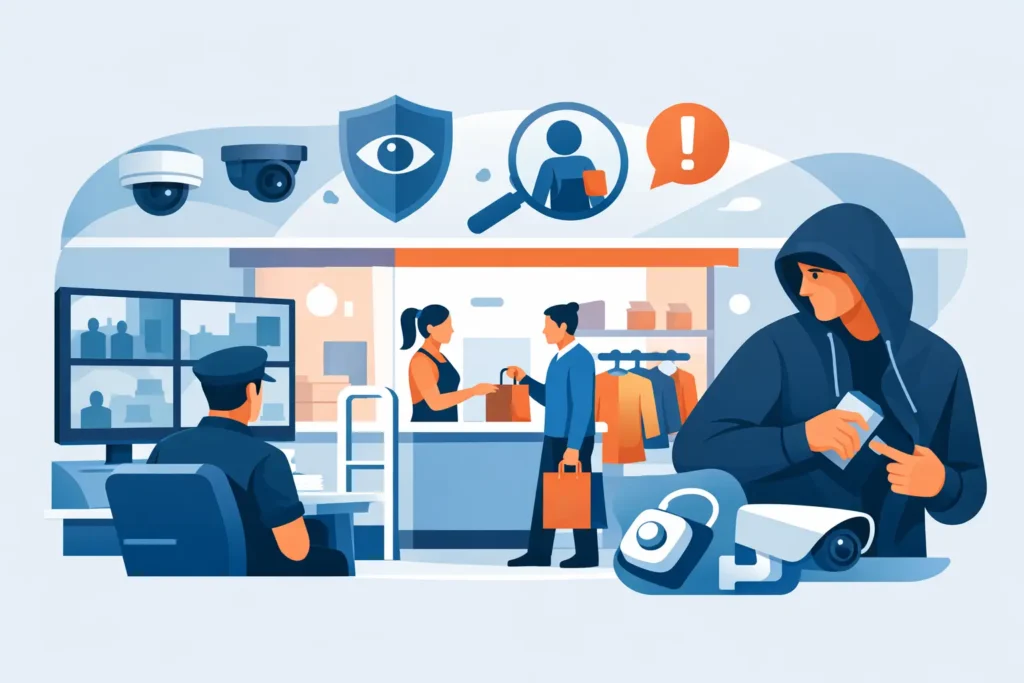
Shrink rarely comes from one failure. It usually builds from small weaknesses across the store – blind spots, unsecured high-value items, poor shelf visibility, weak stock control, and fixtures that were chosen for appearance but not for control. A practical retail loss prevention guide should start there, because most retail risk is operational before it becomes a security incident.
For store owners, project managers, and fit-out teams, loss prevention is not a single product category. It is a store planning discipline. The right anti-theft hardware matters, but so do gondola layouts, checkout positioning, locked display options, shelf organization, and signage that supports both customer flow and staff oversight. The strongest stores treat security, merchandising, and customer experience as connected decisions.
What a retail loss prevention guide should cover
A useful retail loss prevention guide needs to address the full selling environment, not just theft at the exit. Retail loss also comes from internal error, damaged goods, poor replenishment control, and displays that make monitoring difficult. In supermarkets, that may mean concealed corners in promotional zones or poorly managed impulse racks. In electronics, it often means exposed high-value products without the right protective display systems. In fashion, fitting room processes and fixture density can become the weak point.
That is why prevention should begin during planning, before product is placed on the shelf. Once a store is trading, every layout flaw costs more to correct. Retrofitting security pedestals, relocating display islands, or replacing unsuitable showcases is far more disruptive than specifying the right systems at the start.
Start with store layout, not just surveillance
Many retailers make the same mistake. They add cameras late in the process and expect surveillance to solve a layout problem. Cameras help, but they do not fix poor sightlines. If staff cannot naturally see key categories from service areas, shrink risk increases even in well-equipped stores.
A strong layout creates long, clear lines of visibility across the sales floor. Aisle height matters. Endcaps matter. So does the position of promotional bins, freestanding units, and seasonal displays. If these elements create hidden pockets, they can encourage both shoplifting and inventory inaccuracy.
Checkout placement is equally important. Front-end visibility still plays a major role in deterrence, especially in convenience, grocery, and pharmacy-style formats. High-risk categories such as batteries, razors, cosmetics, accessories, and small electronics benefit from placement within natural staff view. This does not always mean locking everything away. It means choosing a level of access that matches the product risk, unit value, and sales model.
Fixture selection has a direct impact on shrink
Loss prevention is often discussed as a technology issue, but fixtures do a great deal of the daily work. Open shelving supports accessibility and faster shopping, but it can also increase product exposure. Locked cabinets improve control, yet they may slow sales if overused. The right answer depends on product type and customer behavior.
For high-value merchandise, secure display cases, controlled-access cabinets, and protected demo fixtures can reduce risk without removing the product from view. For supermarkets and general retail, shelf merchandising components can improve facing discipline and reduce the disorder that makes loss harder to spot. Acrylic holders, dividers, push-feed systems, and organized display channels make stock movement more visible to staff and easier to audit.
This is where commercial display planning matters. A fixture should not only present the product well. It should also support monitoring, replenishment, and controlled access. Trade buyers who evaluate display systems through that lens usually make better long-term decisions than those who buy on unit cost alone.
High-risk zones need a different standard
Not every area of the store requires the same level of control. Entrance zones, fitting rooms, self-checkout areas, promotional islands, and back-of-store corners typically deserve more attention than standard center aisles. So do categories with small packaging, high resale value, or frequent handling.
A balanced approach works best. Entry and exit points may require anti-theft pedestals and visible deterrence. High-value departments may need lockable showcases or tethered display solutions. Self-service areas often benefit from clearer product zoning and staff lines of sight rather than heavy physical barriers.
There is always a trade-off. Over-securing a low-risk category can frustrate shoppers and reduce sales conversion. Under-securing a premium category can create a repeat loss pattern that quickly outweighs the value of open merchandising. The right standard is the one that protects margin without damaging the shopping experience.
Signage and visual control are part of prevention
Signage is usually discussed in terms of promotions and brand consistency, but it also supports store control. Clear category markers reduce wandering and confusion. Checkout messaging can reinforce surveillance presence and store policy. Fitting room and return area signage helps set customer expectations before issues arise.
Illuminated signage and well-planned display communication can also improve visibility in darker departments or large-format stores. When customers and staff can navigate the space easily, suspicious movement stands out more clearly. That does not replace training, but it supports it.
Visual clutter is another problem. Too many posters, hanging signs, or poorly placed display elements can obstruct lines of sight and distract from monitoring. Good merchandising should guide attention to product, not create visual noise that makes control harder.
Staff process still matters more than hardware alone
Even the best-equipped store will underperform if operating routines are weak. Opening and closing checks, cycle counts, exception reporting, and replenishment discipline all affect shrink. So does the simple habit of maintaining clean, shop-ready shelves. Disorder hides loss.
Front-line staff should know which categories are vulnerable, which displays require extra checks, and how to respond when a fixture appears tampered with or product density changes unexpectedly. Managers should also review whether losses are tied to specific times, categories, or zones. Patterns often reveal a display or process issue before they point to a staffing issue.
For multi-location retailers, consistency is essential. If one branch protects premium accessories in locked acrylic display units while another leaves them on open pegs, results will differ. Standardizing fixture strategy across locations makes shrink performance easier to manage and compare.
Technology works best when the environment supports it
Electronic article surveillance, CCTV, mirrors, access control, and digital monitoring all have a role. But technology performs better when paired with an environment designed for control. A camera covering a congested promotional area is less useful than a camera covering a well-zoned, visible one. An anti-theft system at the door is stronger when high-risk goods are already merchandised with sensible protection.
This is especially relevant for retailers planning new fit-outs or refurbishments. Security devices should be coordinated with shelving, counters, showcases, and customer flow from the beginning. When these systems are specified together, installation is cleaner, store presentation remains professional, and the result is usually more effective.
For buyers across MENA retail projects, this coordinated approach also simplifies procurement. Working with a supplier that understands both display requirements and security-related fixture choices can reduce specification gaps during planning.
The best retail loss prevention guide is store-specific
There is no single formula that fits a supermarket, a phone accessories store, and a fashion outlet equally well. Product mix, store size, staffing level, and shopper behavior all shape the right prevention strategy. A neighborhood convenience store may prioritize visibility and fast deterrence. A premium electronics retailer may need secure interaction displays that let customers engage with the product under controlled conditions. A grocery chain may focus more on aisle design, front-end control, and shelf organization than on locked fixtures.
That is why store audits are so useful before making fixture or security changes. Walk the floor from the customer perspective and from the staff perspective. Identify where sightlines break, where products are overexposed, where signage blocks visibility, and where display choices make replenishment difficult. Small changes in layout and fixture selection can often reduce risk faster than adding more hardware.
JS Retail Displays works with commercial buyers who need that practical view of store environments – where presentation, space efficiency, and control have to work together. That matters because loss prevention is not separate from merchandising. It sits inside it.
The most effective stores are not the ones that feel heavily guarded. They are the ones that feel well planned, easy to shop, and easy to supervise at the same time. When your displays support visibility, your fixtures support control, and your layout supports staff awareness, shrink has fewer places to hide.