
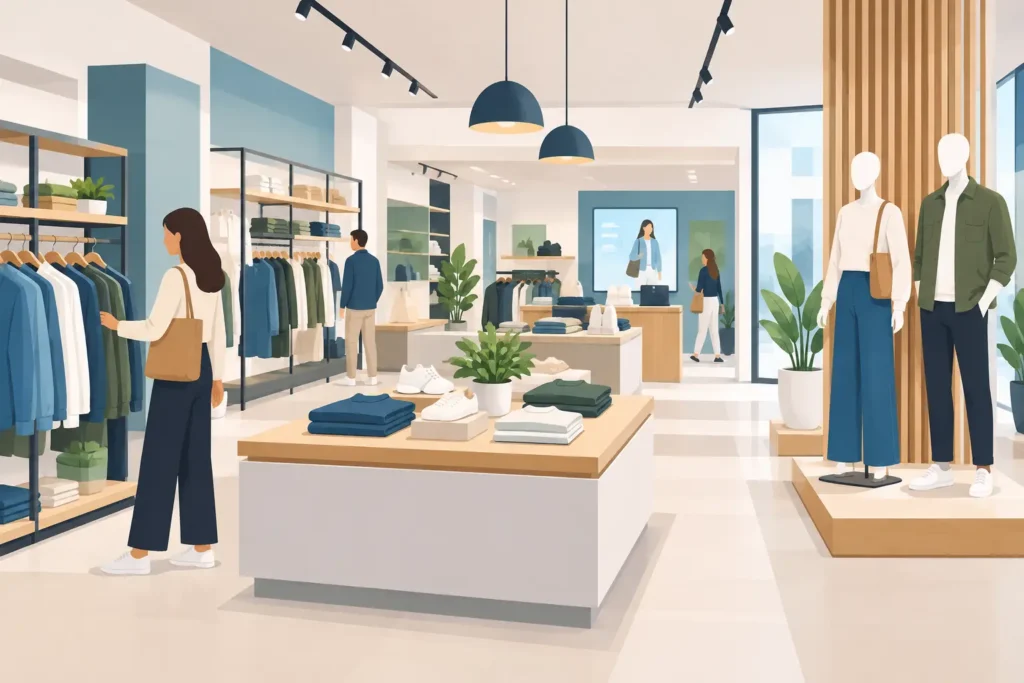
A store fit-out is no longer judged only by how polished it looks on opening day. The most relevant shopfitting trends are changing how retailers use every square foot, guide customer decisions, protect merchandise, and adapt when product ranges or promotions change. For operators, fit-out contractors, and multi-site retail teams, the priority is clear: invest in display systems that support daily trading, not just an initial visual concept.
Shopfitting Trends Moving From Design to Daily Operations
Retailers are placing greater value on fixtures that can be reconfigured without major disruption. This is partly a response to shorter promotional cycles, seasonal ranges, and changing shopper behavior. It is also a practical response to the cost of refitting a store whenever an assortment changes.
Modular shelving, adjustable bracket systems, gondola ends, freestanding display units, and interchangeable signage components allow teams to update a category without replacing the full fixture. In a supermarket, that may mean moving shelf positions to suit different pack sizes. In an electronics store, it may mean changing a display bay from headphones to smart home products. In fashion, it can mean shifting from folded garments to hanging stock as a collection develops.
The benefit is flexibility, but it depends on selecting commercial-grade components. Low-cost systems that loosen, scratch, or lack replacement parts quickly create an inconsistent store appearance. Retailers should specify fixture ranges with compatible accessories, dependable load ratings, and a clear route for future expansion.
Flexible layouts need clear merchandising rules
Flexibility should not become visual disorder. Adjustable systems work best when the store has clear planograms, category rules, and sign standards. A movable shelf is useful only when staff understand the correct shelf depth, ticket position, product grouping, and facing requirements.
For chains, standardized fixture families make this easier. The same shelf merchandising components, label holders, poster frames, and display hardware can be used across multiple locations while allowing each site to work within its own footprint. This gives central teams stronger brand control and reduces the complexity of replenishing damaged or missing parts.
Digital Displays With a Defined Job
Digital signage remains one of the most visible shopfitting trends, but successful installations are more disciplined than simply placing screens around a store. A screen should answer a retail need: promote a high-margin offer, communicate a product feature, reduce perceived waiting time, direct customers to a service area, or reinforce a campaign.
At the entrance, digital displays can introduce current promotions or seasonal messages. In a supermarket, they may support meal solutions near fresh food or prepared meals. In electronics retail, they can demonstrate features that are difficult to explain through a static graphic. At checkout, compact digital messaging can promote add-on purchases or communicate loyalty benefits.
Screen placement matters as much as content. A display facing strong daylight may require higher brightness. A screen mounted above a busy aisle must remain readable from a distance. In tighter spaces, a poorly positioned screen can create congestion or distract from the product itself. Power access, cable management, mounting security, ventilation, and ongoing content updates should all be decided before the fit-out is finalized.
Digital does not replace printed point-of-purchase material in every situation. Shelf-edge communication, poster displays, acrylic holders, and illuminated signs remain cost-effective for fixed messages and local promotions. The strongest stores use each format where it performs best rather than treating technology as a substitute for sound merchandising.
Smaller Footprints, Better Product Visibility
Many retailers are working with compact stores, high rental costs, or a need to increase selling capacity without making the space feel crowded. This has led to greater attention on vertical presentation, efficient aisle planning, and fixture selection by category rather than by appearance alone.
Wall-mounted systems and taller shelving can increase capacity, but height has limits. Products placed too high are harder to reach and less likely to sell without staff assistance. The best use of upper levels is often for lighter stock, reserve presentation, or branded communication. High-demand and high-margin items should remain within easy viewing and handling zones.
Freestanding displays also need a commercial purpose. End caps, dump bins, promotional towers, and queue-line fixtures can create strong sales opportunities, but they should not block sightlines or restrict circulation. In grocery and convenience formats, an overly dense layout can slow baskets and create frustration during peak periods. In fashion and specialty retail, it can reduce the sense of quality that the brand is trying to establish.
A practical planning question is not simply, “How many fixtures fit?” It is, “What must the shopper see, compare, pick up, and pay for without friction?” That question produces better decisions about aisle width, display height, counter location, and promotional space.
Security Built Into the Selling Environment
Retailers are increasingly designing security into displays instead of treating it as an add-on after losses occur. This is particularly relevant for electronics, cosmetics, accessories, premium beverages, and other high-value or easily concealed products.
Modern anti-theft systems can protect merchandise while keeping it visible and accessible enough to support sales. Safer displays, security hooks, alarmed product holders, and controlled-access cabinets can all be matched to the level of risk and the type of customer interaction required. A smartphone accessory wall needs a different approach from a jewelry counter or a high-end appliance demonstration area.
The trade-off is important. Excessive barriers can make products feel unavailable and increase the need for staff intervention. Too little protection can turn an attractive display into a loss prevention problem. The right approach is layered: open presentation for lower-risk stock, controlled fixtures for selected lines, and clear staff sightlines around vulnerable zones.
Security hardware should also be visually compatible with the rest of the shopfitting package. A cluttered mix of locks, cables, and mismatched holders can weaken brand presentation. Integrated solutions keep the display cleaner while supporting daily operational requirements.
Sustainable Choices That Also Make Commercial Sense
Sustainability is influencing fixture procurement, but buyers are increasingly evaluating it through durability, maintenance, and replacement cycles. A fixture that lasts through multiple store updates is generally more practical than a disposable unit that must be replaced after one campaign.
Powder-coated metal shelving, durable acrylic display holders, repairable lighting components, and modular display systems can support a longer service life when selected correctly. Reusable graphic frames and changeable poster systems also reduce the need to replace complete sign units whenever messaging changes.
Material selection should match the location. Acrylic can provide clean product visibility and work well for holders, risers, and protected displays, but it may not be suitable for every high-impact area. Metal systems deliver strength and load capacity, while wood finishes can add warmth in fashion, beauty, hospitality, and premium food environments. There is no universal “best” material. The correct specification depends on traffic, cleaning needs, product weight, expected fixture life, and brand position.
For project teams, standardization is often the most overlooked sustainable decision. Using a repeatable fixture specification across stores reduces offcuts, simplifies replacement orders, and makes maintenance more manageable over time.
Lighting and Signage Are Becoming More Targeted
General illumination makes a store usable. Targeted lighting and signage make categories easier to shop. Retail fit-outs are moving toward more intentional use of illuminated branding, shelf-level communication, and focused lighting at key decision points.
Illuminated signs can strengthen storefront presence or define departments inside a larger retail environment. Used well, they help customers orient themselves quickly. In a large-format store, department signs should be visible from the main circulation path, not hidden above a fixture run or overwhelmed by promotional graphics.
Product lighting should be selected carefully. Food, cosmetics, apparel, and electronics all respond differently to color temperature and intensity. Bright light can improve visibility, but harsh glare on glass, screens, or acrylic holders makes products harder to inspect. Lighting should support the merchandise and the shopper’s comfort, not compete for attention.
Signage also needs a hierarchy. Permanent category signs, temporary promotions, price communication, and product education should not all use the same visual weight. When every message is oversized or brightly colored, shoppers stop seeing the messages altogether.
Data-Informed Fit-Outs, Not Data-Led Clutter
Retailers now have more access to sales reports, traffic patterns, dwell time, and category performance. This information can improve shopfitting decisions when it is interpreted alongside staff experience and site conditions.
If a category performs well but causes congestion, it may need more display frontage rather than more stock depth. If customers frequently ask where a service is located, the issue may be navigation and signage rather than staffing. If small accessories sell best near a core category, a cross-merchandising fixture may be more effective than a separate aisle.
Data should guide testing, not force identical layouts in every store. A neighborhood grocery, airport retailer, mall-based electronics outlet, and flagship fashion store may sell similar products under very different conditions. Local customer missions, floor area, staffing levels, and lease constraints still matter.
Planning for Change Before the Store Opens
The strongest fit-outs create a reliable platform for change. They combine durable core fixtures with flexible merchandising components, visible communication, appropriate security, and display zones that can be refreshed without disrupting trading.
Before approving a specification, project teams should walk through ordinary tasks: receiving stock, replenishing shelves, changing prices, cleaning fixtures, securing valuable items, replacing graphics, and resetting promotions. If these tasks are difficult, the store will lose time and presentation quality after opening.
A capable supply partner can help align shelving, signage, illuminated displays, acrylic holders, security products, and merchandising accessories into one practical specification. For retailers planning a new location or a multi-store rollout, the most valuable trend is not a single fixture style. It is choosing systems that keep the store organized, sale-ready, and easier to operate long after the launch campaign ends.