
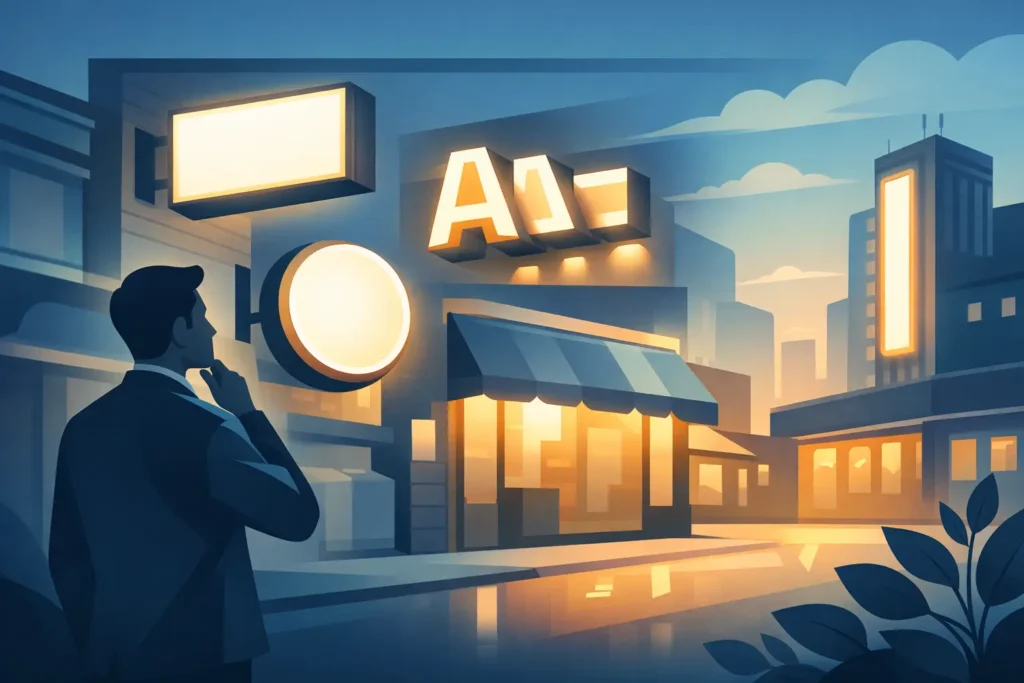
A storefront has only a few seconds to make its case. In a busy retail strip, mall corridor, or roadside location, illuminated shop signage solutions often decide whether a customer notices your brand, understands your offer, and walks in. For retailers and fit-out teams, the question is not whether lighting matters. The real question is which signage approach fits the store format, operating hours, brand position, and maintenance expectations.
The right illuminated sign does more than add brightness. It supports wayfinding, strengthens brand consistency, and helps a location compete in visually crowded environments. That matters even more for supermarkets, electronics stores, pharmacies, fashion outlets, and hospitality settings where traffic flow and quick recognition directly affect sales.
What illuminated shop signage solutions need to do
Commercial signage should be judged by performance first. Appearance matters, but business buyers usually need a sign system that remains legible, durable, and cost-effective over time. A sign that looks strong on installation day but fades, flickers, or becomes difficult to service can create avoidable operating costs.
Effective illuminated signage usually has to deliver on four points at once. It needs to attract attention from the right viewing distance, represent the brand accurately, stay readable in different lighting conditions, and hold up in the actual trading environment. Indoor and outdoor applications place very different demands on materials, lighting components, and installation methods.
For example, a sign above a grocery storefront may need strong visibility across parking areas and from moving traffic. A sign inside a shopping mall may need cleaner visual refinement, controlled brightness, and compliance with landlord specifications. In both cases, the sign is doing a practical job, but the specification changes.
Common illuminated shop signage solutions for retail environments
Not all illuminated signage works the same way. The most suitable option depends on where the sign will sit, how it will be viewed, and what kind of impression the brand wants to create.
Lightbox signage
Lightboxes remain one of the most widely used options because they are direct, cost-efficient, and easy to apply across many retail categories. They work well for storefront fascia signs, promotional graphics, menu-style displays, and branded directional applications.
Their strength is straightforward visibility. If a business needs a larger branded face with even lighting and clear messaging, a lightbox is often the practical choice. The trade-off is that lower-spec lightboxes can look flat or generic if material quality and graphic finishing are poor.
Illuminated channel letters
Channel letters give retailers a more premium brand presentation. Individual letters, numbers, or logos are fabricated and illuminated to create stronger depth and definition. This format suits fashion stores, electronics retailers, branded chains, and businesses where storefront identity is a central part of customer perception.
They generally cost more than basic panel signs, but they deliver sharper visual impact and better brand distinction. For locations competing side by side with similar tenants, that difference can matter.
LED edge-lit and acrylic signage
For interior branding, reception areas, product zones, and directional signage, edge-lit acrylic systems can offer a clean and modern result. These are common in technology retail, service counters, showroom environments, and premium commercial interiors.
They are especially useful where space is tighter or where buyers want a more refined illuminated effect without a bulky sign box. The limitation is that they are not always the best option for long-distance exterior visibility.
Illuminated poster and promotional displays
Retailers often focus on the main storefront sign and overlook the sales value of illuminated promotional displays inside the store. Backlit poster frames and illuminated promotional panels can lift campaign visibility, highlight launches, and support category navigation.
This is particularly effective in supermarkets, convenience stores, duty-free retail, and seasonal promotional zones where messaging changes regularly. If product campaigns rotate often, serviceability and graphic replacement speed should be part of the decision.
How to choose the right illuminated shop signage solutions
The best specification starts with the commercial setting, not the catalog page. Buyers who begin with appearance alone often end up revising the sign later because the brightness is wrong, the scale is undersized, or the maintenance access was not considered.
Start with viewing distance and placement
A sign seen from 10 feet and a sign seen from across a road should not be designed the same way. Letter depth, illumination strength, graphic clarity, and overall sign size should all reflect how customers actually approach the site.
If the sign is mounted high above a storefront, readability becomes more important than decorative detail. If it is positioned near an entrance or inside a mall facade, finish quality and close-range appearance carry more weight.
Match brightness to the environment
More light is not always better. Outdoor retail signage may need stronger illumination to remain effective after dark, while interior signs should avoid glare and visual fatigue. In premium stores, harsh brightness can make a brand look cheaper than intended.
It helps to think in terms of balance. The sign should stand out clearly without overpowering nearby merchandising, architectural finishes, or adjacent tenants.
Consider operating hours and energy use
For businesses trading late into the evening, illumination is not just a branding tool. It is part of store visibility and customer guidance. LED-based systems are usually preferred because they offer better energy efficiency, longer service life, and more consistent illumination than older lighting formats.
That said, not all LED systems perform equally. Component quality, heat management, and power supply reliability all affect long-term results. Low upfront pricing can become expensive if failures happen early.
Plan for maintenance access
This is where project decisions often become unnecessarily costly. A sign that is difficult to open, clean, or repair may disrupt trading or require specialist access equipment each time maintenance is needed.
For retail chains and multi-site operators, standardizing sign formats where possible can make servicing easier and reduce replacement complexity. For one-off flagship locations, a custom solution may still make sense, but it should be specified with access in mind.
Design and material factors that affect results
Lighting gets attention, but construction quality determines whether the sign keeps performing. Housing materials, face panels, acrylic quality, weather resistance, print finish, and electrical components all influence lifespan.
In outdoor installations, heat, dust, and UV exposure should be taken seriously, especially in demanding climates across the Middle East and Africa. Materials that perform well in mild indoor conditions may not hold up the same way on a sun-exposed storefront. Seals, finishes, and component protection matter more than many buyers expect.
Brand consistency is another major factor. Illumination can shift how colors appear, especially with translucent materials. If corporate colors are central to the identity, material testing and color matching should be part of approval. A sign can be structurally sound and still miss the mark if the brand presentation looks off at night.
Where illuminated signage delivers the strongest return
The return on signage is not always measured only by direct walk-ins. In many commercial environments, the payoff comes from a combination of visibility, recognition, and customer confidence.
For supermarkets and grocery stores, illuminated signage helps customers identify entrances, departments, and promotions quickly. In electronics retail, it supports a more modern and technology-led store image. In fashion and branded outlets, it contributes to perception and storefront appeal. In hotel or mixed-use commercial settings, illuminated signs improve wayfinding and reinforce presentation standards.
The strongest return usually comes when signage is treated as part of the wider retail display plan. A well-lit fascia paired with poor in-store navigation only solves part of the problem. When external branding, interior category signage, promotional displays, and fixture planning are aligned, the store becomes easier to shop and easier to remember.
Why specification support matters
Many buyers do not need more options. They need fewer, better-matched options. That is especially true for contractors, procurement teams, and multi-site retail operators balancing timelines, budgets, and installation requirements.
A dependable signage supplier should help narrow the decision based on store type, application, expected traffic, branding needs, and practical site conditions. In a trade setting, that guidance is often more valuable than a large product range on its own. JS Retail Displays works in that space by supporting commercial buyers with retail display categories that are selected around use, visibility, and project fit rather than appearance alone.
When illuminated signage is specified properly, it works hard every day without asking for attention. It draws customers in, supports cleaner brand communication, and helps the rest of the store do its job more effectively. If you are planning a new fit-out or upgrading an existing location, the best choice is usually the one that keeps performing long after the installation team has left.