
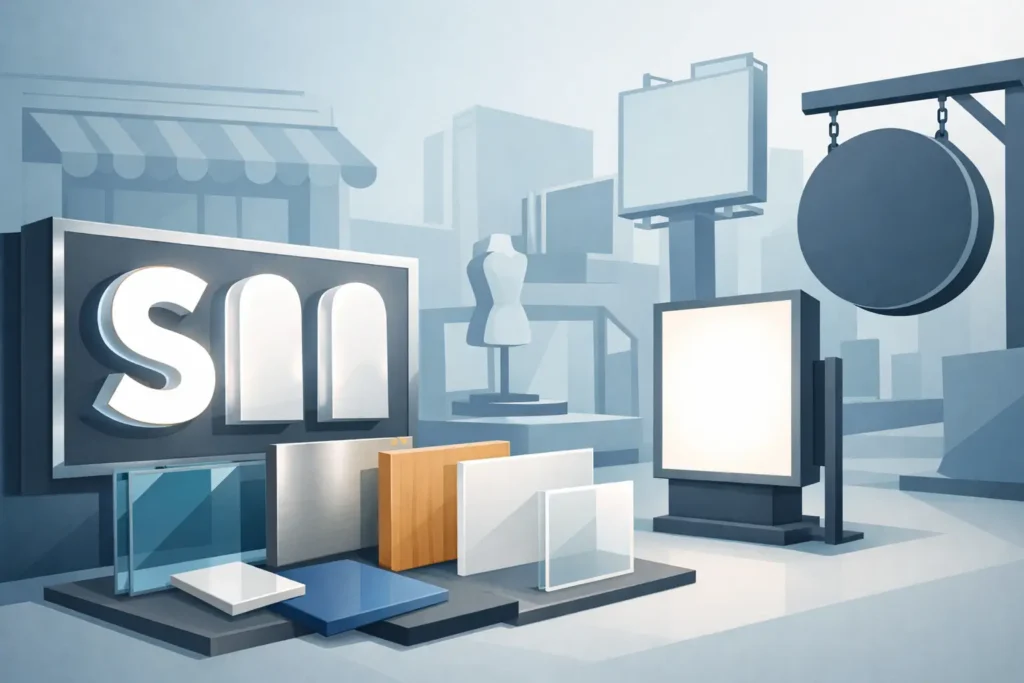
A shelf-edge promotion that curls after one week, a storefront panel faded by direct sun, or a cracked acrylic menu holder creates the same problem: the message is still there, but the store no longer looks well managed. This commercial signage materials guide helps retail and commercial buyers match materials to the location, expected lifespan, visual standard, and budget of the project.
Signage is not one product category. A temporary price promotion, a permanent department sign, a backlit brand panel, and an outdoor directional sign face very different conditions. Selecting by appearance alone can lead to unnecessary replacement costs, difficult installation, or poor visibility at the point of sale.
Start With the Sign’s Job
Before comparing materials, define what the sign needs to do. For a supermarket, this may mean guiding shoppers between departments, identifying promotions, and supporting frequent shelf-level price changes. For an electronics retailer, the priority may be secure product messaging, illuminated branding, and clean information holders that support a premium presentation.
The first decision is whether the sign is temporary, semi-permanent, or permanent. Temporary signage should be economical, light, and easy to replace. Semi-permanent signs need better scratch resistance and a more finished appearance. Permanent signs require a material that can withstand cleaning, handling, lighting exposure, and, where applicable, outdoor weather.
Also consider viewing distance. Small-format signs at a shelf or counter need sharp print and a material that stays flat. Signs viewed from across an aisle or storefront need stronger contrast, sufficient rigidity, and a finish that supports legibility under store lighting. A material can be technically durable but still be the wrong choice if glare makes the message difficult to read.
Commercial Signage Materials Guide: Core Options
Acrylic for premium indoor presentation
Acrylic is a reliable choice for indoor signs where clarity, gloss, and a polished finish matter. It is widely used for menu holders, branded panels, wall signs, counter displays, directory signs, and illuminated applications. Clear acrylic can protect printed inserts, while colored or printed acrylic creates a clean, high-end visual effect.
Its main advantage is presentation quality. Acrylic has a more refined appearance than many lightweight plastic boards and works particularly well in fashion stores, electronics shops, hotel reception areas, pharmacies, and branded service counters. It is also available in different thicknesses, allowing buyers to balance visual impact with cost.
The trade-off is that acrylic can scratch or crack if handled roughly. It is not the best material for high-turnover signs that staff need to move frequently, and it requires careful drilling and mounting. For signs close to customer contact points, use suitable thickness and mounting hardware rather than treating acrylic as a flexible poster board.
PVC foam board for versatile printed signs
PVC foam board is one of the most practical materials for indoor retail signage. It is lightweight, rigid, easy to print, and suitable for promotional boards, category signs, wall graphics, price communication, and short- to medium-term displays. It offers a smooth surface that supports clear color reproduction and can be cut into custom shapes.
For retail fit-outs, PVC foam board provides a useful middle ground between low-cost paper signage and more premium fabricated panels. It is easier to handle than heavier materials and can work well where several signs need to be installed quickly across a store or chain.
Thickness matters. A thin board may be adequate for framed graphics or small wall applications, while larger hanging or freestanding signs need more rigidity. PVC foam board is generally better for controlled indoor environments than exposed exterior locations. Continuous heat, harsh weather, or high-impact areas can shorten its usable life.
Aluminum composite for durability and outdoor use
Aluminum composite material, often called ACM, consists of a solid core bonded between aluminum sheets. It is rigid, stable, and well suited to storefront panels, exterior directional signs, parking signs, building identifiers, and long-term branded installations. It also performs well in interior locations that need a durable, professional panel.
ACM is a strong option when signs must remain flat over larger areas or face demanding conditions. Compared with foam board, it offers better resistance to warping and a more substantial feel. It can be printed directly, finished with vinyl graphics, or fabricated into dimensional signage depending on the project requirement.
The higher cost is justified when longevity, weather resistance, and installation stability are priorities. However, it is heavier than lightweight boards and may require stronger fixings, site measurements, and professional installation. For a short weekend promotion, ACM is usually more material than the application requires.
Corrugated plastic for short-term promotions
Corrugated plastic is a lightweight fluted board commonly used for temporary promotions, event signs, price campaigns, parking guidance, and short-term outdoor messaging. It is economical and easy to transport, making it useful when a retailer needs volume signage across multiple locations.
Its limitations are visible in premium environments. The fluted structure can reduce the refined look of the sign, especially at close range, and edges may become damaged with repeated handling. It is a functional choice for temporary communication, not a substitute for permanent department signage or polished brand graphics.
Vinyl for graphics, windows, and flexible applications
Vinyl is not always a standalone rigid sign material, but it is central to commercial signage. It can be applied to windows, walls, panels, floors, vehicles, display fixtures, and ACM boards. Retailers use vinyl for window promotions, campaign graphics, safety markings, directional messages, and branding updates.
The right vinyl depends on the surface and removal requirements. Removable vinyl is useful for seasonal campaigns and leased spaces. Permanent adhesive vinyl suits longer-term applications. Laminated vinyl offers added protection against moisture, UV exposure, cleaning, and scuffing.
For storefront windows, consider daylight and nighttime visibility. A graphic that looks strong from outside during the day may appear different when interior lights are on. Perforated window film can support one-way visibility, but it may not provide the same color density as solid vinyl. Test samples when brand color accuracy is critical.
Match Material to the Environment
Indoor and outdoor conditions should drive the final specification. Indoors, the biggest risks are cleaning chemicals, hand contact, trolley impact, heat from lighting, and damage during merchandising changes. Outdoor signs must also handle sun exposure, wind, rain, dust, temperature changes, and local installation requirements.
For humid locations, food retail back-of-house areas, or entrances exposed to frequent cleaning, choose materials and print finishes that tolerate moisture. Paper-based signs may be cost-effective, but they need protective sleeves, frames, or lamination if they will be reused. In high-traffic areas, rigid sign holders and protective acrylic fronts can extend the life of printed inserts.
Fire safety and local building requirements also need attention, especially for shopping malls, hotels, airports, and large commercial projects. The sign material, adhesives, electrical components, and installation method may need to meet specific standards. Confirm these requirements before production rather than after graphics have been approved.
Consider Lighting, Finish, and Print Method
The substrate is only one part of the result. Matte finishes reduce glare and suit information-heavy signs, including wayfinding, shelf communication, and menu boards. Gloss finishes can make colors appear more vivid but may reflect overhead lights. In a supermarket aisle with strong ceiling lighting, glare can interfere with a shopper’s ability to read a promotion quickly.
Backlit signs need materials designed to diffuse light evenly. Standard printed panels can create hot spots or uneven color when placed in a light box. Use purpose-made backlit film, acrylic, or fabric systems where illumination is part of the specification.
For projects with frequent graphic changes, separate the structure from the message. Poster frames, snap frames, acrylic holders, shelf talker systems, and fabric graphic frames allow teams to update campaigns without replacing the entire sign. This approach reduces waste and keeps store communication consistent across locations.
Plan for Installation and Replacement
A sign that looks correct in a sample can become difficult to manage once installed at scale. Consider how it will be mounted, who will replace it, and whether store teams have the tools to do so safely. Adhesive-mounted graphics may be quick to apply, but removal can leave residue or damage painted walls. Mechanically fixed panels are more secure but require accurate drilling and a longer installation process.
For multi-location rollouts, standardize sizes, materials, and replacement methods wherever possible. A consistent system makes it easier to reorder signs, train store teams, and maintain a unified brand presentation. It also prevents small variations in material thickness or finish from becoming visible across the store network.
A capable supplier can help align signage materials with fixtures, poster systems, illuminated displays, acrylic holders, and shelf merchandising components. JS Retail Displays supports this kind of coordinated sourcing, helping commercial buyers avoid a patchwork of incompatible display products.
The best signage material is the one that keeps communicating clearly for the full life of the campaign or installation – without creating avoidable maintenance, replacement, or presentation issues.