
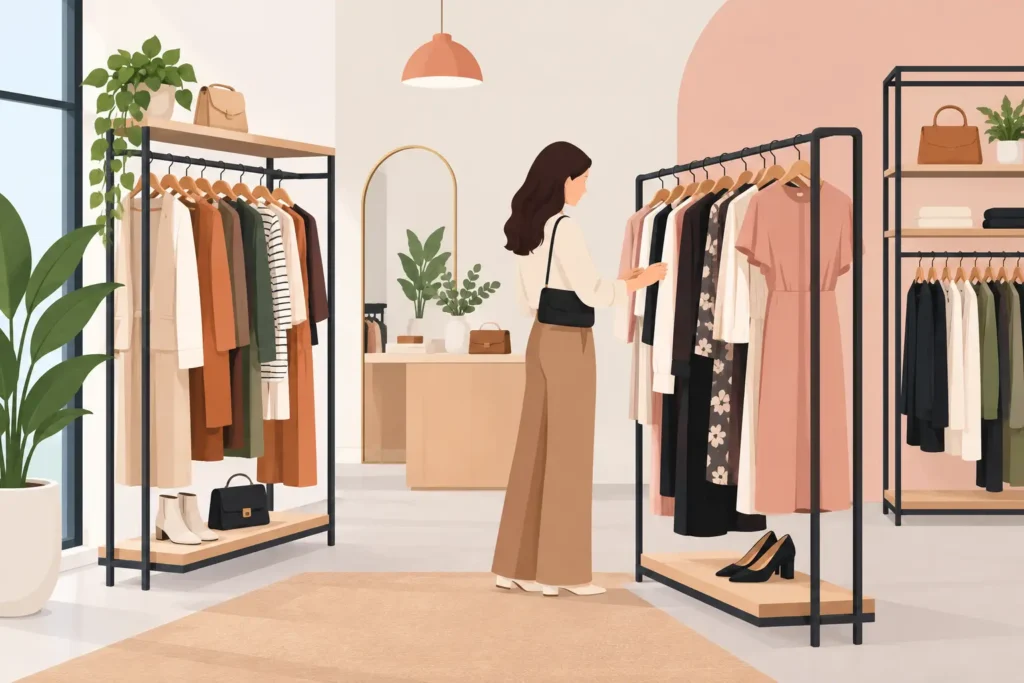
A crowded boutique can make premium merchandise look ordinary. An understocked one can feel unfinished and limit sales opportunities. To choose racks for boutiques effectively, buyers need to balance display capacity with visual space, then select fixtures that support the merchandise, customer journey, and intended brand position.
For fashion retailers, fit-out contractors, and multi-location store operators, clothing racks are not simply storage. They establish the rhythm of the sales floor, define departments, and determine how easily shoppers can see, touch, and compare products. The right rack program also makes replenishment faster and keeps the store presentable through busy trading hours.
Start With the Boutique Floor Plan
Rack selection should begin with the layout, not a product catalog. Review the total selling area, entrance position, fitting rooms, cashier location, wall lengths, and any fixed architectural features. These elements determine where freestanding racks can sit without interrupting customer movement or blocking sightlines.
A central floor fixture needs enough clearance for customers to pass comfortably on both sides. This becomes particularly important in boutiques with strollers, shopping bags, or high weekend traffic. A narrow aisle may technically fit more racks, but it can make browsing uncomfortable and discourage customers from entering deeper parts of the store.
Plan the floor in zones. The entrance should support a clear first impression, often with a focused new-arrival display rather than a dense bank of rails. The central area can carry key collections and coordinated outfits, while perimeter walls provide high-capacity display for core sizes, colors, and categories. Place promotional racks where they are visible from the main customer path but do not create a bottleneck at the door or checkout.
The most efficient layouts combine wall-mounted systems with a limited number of movable floor racks. Walls handle capacity without consuming valuable floor space. Freestanding fixtures provide flexibility for seasonal campaigns, new collections, and quick floor resets.
Choose Racks for Boutiques by Merchandise Type
The weight, length, and presentation needs of the garment should guide the rack format. A rail that works well for lightweight blouses may be unsuitable for leather jackets, formalwear, or heavily embellished pieces.
Straight racks are practical for displaying a single collection in a clean line. They work well along walls, in narrow spaces, and for focused color stories. Round racks hold more garments in a compact footprint and can suit value-focused promotions or high-volume basics, although excessive density can reduce the premium feel of a boutique.
Two-way and four-way racks are useful for feature zones because they allow merchandising from multiple angles. They are especially effective for curated capsules, coordinated looks, accessories, or items with a strong seasonal message. Their value depends on disciplined presentation. If every arm is filled to maximum capacity, the fixture can look cluttered rather than intentional.
For long dresses, abayas, coats, and jumpsuits, check the usable hanging height rather than relying on the overall fixture height. Garments should not drag on the floor or bunch at the base. Adjustable-height rails offer better flexibility where collections change between shorter casualwear and longer formal pieces.
Children’s apparel, handbags, footwear, and folded knitwear may require a combination of hanging racks, shelving, hooks, and display tables. Using one rack type throughout the store is rarely the most effective solution. A boutique performs better when each fixture is matched to the way the product should be viewed and handled.
Calculate Capacity Without Overfilling
Rack capacity is a commercial decision as much as a physical measurement. Buyers should consider the number of styles, size runs, replenishment frequency, and desired shopping experience before ordering fixtures.
A high-density layout may be appropriate for clearance events, outlet formats, or fast-moving basics. For a premium boutique, generous spacing often supports higher perceived value and makes individual pieces easier to notice. Leave enough room between hangers for shoppers to slide garments without force. If customers must pull out several items to inspect one piece, the rack is carrying too much stock.
Also consider what happens after delivery day. A rack that looks well stocked at launch may look empty after a popular size run sells through. Build display capacity around realistic weekly inventory levels, not only opening-day quantities. Back-of-house storage and replenishment routines should support the chosen floor density.
Specify Commercial-Grade Construction
Boutique fixtures are handled repeatedly by customers and staff, so finish and construction matter. Residential-style rails may look acceptable initially but can wobble, chip, or lose alignment under daily commercial use. Select racks with stable bases, properly welded joints, reliable casters where mobility is needed, and a load capacity suitable for the garment category.
Steel and chrome finishes are commonly selected for their durability and clean retail appearance. Matte black can create a contemporary, fashion-led setting and provides visual contrast in light interiors. Brass-tone, gold-tone, or specialty finishes can support a more upscale concept, but consistency is essential. Different metal colors across fixtures, shelving brackets, hooks, and signage can make a carefully planned store appear improvised.
Check the base design as well. Flat bases can tuck under nearby furniture or racks, while T-bases and heavier weighted bases may provide greater stability for larger loads. Where racks must move frequently for cleaning or event setups, commercial casters with locking mechanisms are worth specifying. Mobile does not mean unstable.
Match the Rack Finish to the Brand Position
Fixtures should frame the merchandise rather than compete with it. A minimalist apparel brand may benefit from slim black rails, clear acrylic sign holders, and open spacing. A classic boutique may use warmer finishes, timber display elements, and refined garment rails. Sportswear and streetwear stores often need more adaptable fixtures that can carry apparel, footwear, bags, and graphic signage together.
The key is to create a coherent fixture language. Rack height, metal finish, shelf material, hangers, signage, and lighting should feel like parts of one store system. This is particularly important for chains and brand outlets, where consistency supports recognition across locations.
Avoid choosing a decorative rack solely because it photographs well. The fixture must still accommodate stock levels, allow staff to replenish quickly, and withstand normal customer handling. A visually striking design that slows operations can become an expensive compromise.
Use Wall Systems to Protect Selling Space
Wall-mounted garment systems are often the strongest investment in small and medium boutiques. They keep the center of the store open while providing structured capacity for hanging, shelving, face-outs, and accessory display. Modular wall standards also allow the store to change its mix as collections evolve.
A wall bay can display folded items above a hanging rail, feature a face-out arm for hero pieces, and hold accessories at hand height. This layered approach makes better use of vertical space than a single rail. It also gives staff a clear framework for size organization and color blocking.
When planning wall systems, make sure fixtures are fixed into suitable wall backing and installed to support expected loads. This is especially relevant for heavy coats, denim, bags, or high-volume inventory. A reliable supplier should help assess fixture compatibility, dimensions, and installation requirements before the order is finalized.
Plan for Visual Merchandising and Daily Operations
The best rack is easy to merchandise, clean around, and reset. Store teams should be able to change a focal display without dismantling half the sales floor. Adjustable arms, movable fixtures, shelf accessories, and compatible sign holders give visual merchandisers more control over promotions and product stories.
Consider sightlines from the entrance and cashier point. Tall fixtures should not hide featured displays, staff visibility, or security-sensitive areas. Lower tables and shorter racks near the front can create a more open welcome, while taller wall systems carry the visual weight around the perimeter.
Security also needs to be considered for high-value apparel, handbags, and accessories. Rack planning should allow enough visibility for staff supervision and accommodate tagging, alarm systems, or locked display solutions where needed. Security hardware works best when it is considered alongside the merchandising plan, not added after fixtures are installed.
Build a Rack Schedule Before You Buy
A detailed rack schedule reduces ordering errors and makes budgeting more accurate. Record each fixture type, width, height, finish, quantity, location, and intended merchandise category. Include supporting items such as hangers, size dividers, shelf brackets, sign holders, caster sets, and wall fixings.
For projects with multiple stores, standardize the core rack range while allowing limited local flexibility. This simplifies repeat orders, protects brand consistency, and helps maintenance teams replace damaged parts without searching for discontinued alternatives. It also gives procurement teams a clearer basis for comparing quotations and planning future rollouts.
JS Retail Displays supports boutique projects with fashion retail fixtures and related presentation components that can be specified around layout, merchandise, and operational needs. The goal is not to install the greatest number of racks possible. It is to create a floor where every fixture earns its space by making products easier to see, shop, and sell.