
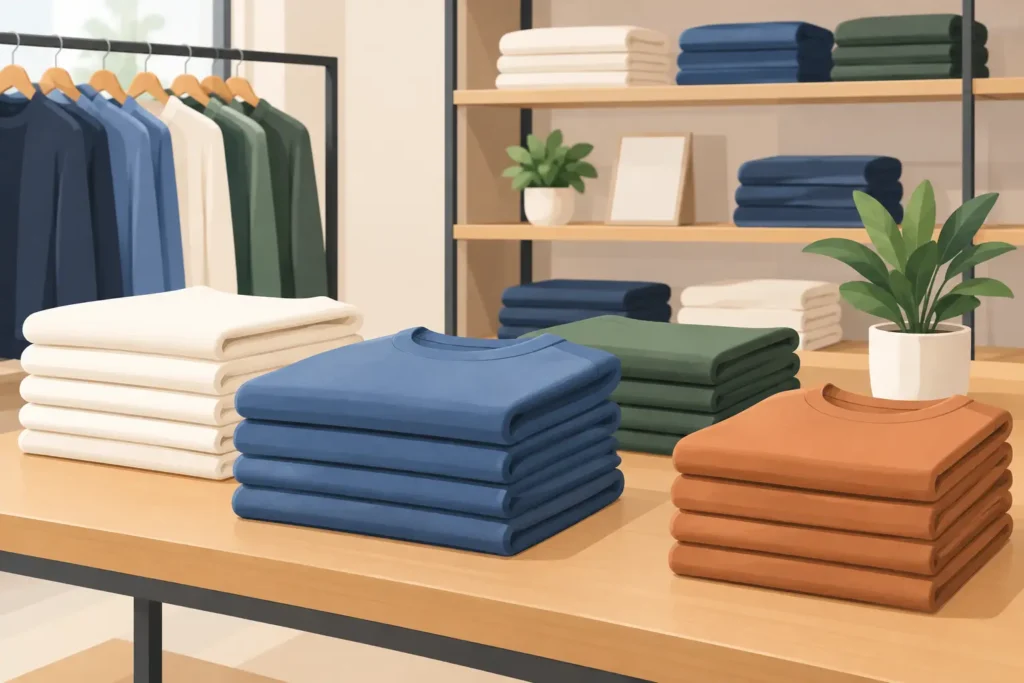
A folded T-shirt can look like a value item or a premium purchase before a shopper ever touches it. The difference is rarely the garment itself. It comes from stack height, color order, fixture selection, signage, and the discipline used to replenish the display. Knowing how to display folded apparel gives retailers a practical way to make more product visible without making the sales floor feel crowded.
Folded merchandise earns its space when it is easy to shop. Customers should be able to understand the category, compare colors, lift one item from a stack, and find the next size without disturbing the entire presentation. For apparel retailers, department stores, sportswear brands, and outlet operators, that requires a display plan rather than simply placing stock on a table.
How to display folded apparel with the right fixture
The fixture should support the product category, the volume of stock, and the customer behavior expected in that area of the store. A feature table is effective for seasonal stories, new arrivals, promotional collections, and color-led presentations because it gives folded apparel a clear focal point. It also lets shoppers approach from several sides, which increases product exposure in busy aisles and open retail environments.
For wall bays and perimeter departments, shelving with folded apparel can create a more structured, space-efficient presentation. Adjustable shelves allow the display to accommodate denim, knitwear, polos, tees, and packaged basics with different stack heights. Use shelf dividers or acrylic separators where several colors or fits sit side by side. These components maintain clean boundaries and reduce the time staff spend rebuilding disturbed stacks.
Low tables work best for products customers are expected to browse freely, such as graphic T-shirts, casualwear, children’s clothing, and sale assortments. Higher nesting tables are useful for creating layers, but they should not block sightlines across the store. A stepped arrangement can separate a premium folded story from high-volume stock while keeping the presentation connected.
Avoid choosing fixtures only by their footprint. A large table may hold more units, but it can encourage overstacking and weaken visibility. In a compact store, a narrower wall display with clear shelf merchandising may outperform a deep table that customers cannot comfortably shop from all sides.
Build stacks that look full, not overfilled
Stack height is one of the most important controls in folded apparel presentation. Stacks that are too low can look picked over, especially on large tables. Stacks that are too high become unstable, hide sizes and colors, and make shoppers reluctant to remove an item. In most cases, a moderate stack is more productive because it appears abundant while remaining easy to handle.
The right height depends on the product. Lightweight T-shirts can be stacked more deeply than hoodies or heavy denim. Bulky knitwear needs lower stacks with more breathing room, while boxed shirts and compact basics benefit from sharp, uniform rows. Keep the top surface level. A leaning pile signals poor maintenance even when the fixture itself is high quality.
Each stack should contain one clear product message. Do not mix fits, fabric weights, or price points within the same pile simply to fill space. A shopper should immediately understand whether they are looking at slim-fit polos, relaxed tees, school uniforms, or promotional fleece. If several options belong together, separate them by color block, shelf section, or fixture level.
Use a consistent folding board or template across the store. Uniform folds create straight edges, help staff replenish faster, and allow more accurate stack planning. The front-facing fold should show the strongest visual element – a logo, collar, graphic, stripe, or fabric texture. If the key detail is hidden inside the fold, the customer has little reason to pick up the garment.
Arrange color, size, and product hierarchy
Color is usually the first thing shoppers read from a folded apparel display. Create a deliberate sequence rather than placing colors according to stock arrival. A tonal progression, such as light to dark, makes a wall or table feel ordered. A grouped color story can work well for fashion collections, while core basics are often easier to shop when neutrals, brights, and seasonal shades are clearly separated.
For branded collections, use the display to communicate the product hierarchy. Place hero colors, new-season items, or higher-margin styles in the most visible position: the center of a table, the top shelf of a wall bay, or the first fixture shoppers see on entry. Supporting colors and replenishment stock can sit below or beside the hero item.
Size organization depends on the selling model. When shoppers select their own size from folded stock, use clear size markers at the shelf edge, within the stack, or on neatly positioned dividers. If only one display sample is presented, keep the full size run in a nearby drawer, cabinet, or back-stock system and use concise signage to direct staff or customers. The goal is to remove uncertainty without covering the apparel with labels.
There is a trade-off between color impact and size convenience. Displaying every size in a separate stack can create a very practical self-service fixture, but it may dilute the visual strength of a color story. For fashion-led displays, show a cleaner range of key colors on the surface and store additional sizes directly below. For value retail and basics, size-led organization may be the better commercial choice.
Use signage to make folded stock easier to buy
A folded display needs concise information, not excessive messaging. Customers should be able to identify the product name, price, promotion, size range, and key benefit without searching. Shelf talkers, small sign holders, acrylic ticket holders, and tabletop display stands help deliver this information while keeping the garment visible.
Position signage so it supports the merchandise instead of sitting on top of it. A sign placed in the center of a table can interrupt browsing and create an obstacle. A raised holder at the rear of the fixture, or a shelf-edge ticket directly below the stack, is usually more effective. For promotional tables, use one strong headline and clear pricing rather than multiple competing notices.
If folded apparel is part of a coordinated outfit, use a simple visual cue to show the connection. A nearby mannequin, hanging sample, or small product image can demonstrate fit and styling while the folded stacks carry the available colors and sizes. This is especially useful for uniforms, activewear, resortwear, and coordinated family collections.
Plan replenishment as part of the display
Even the best fixture loses value when it is not maintained. Folded apparel is handled constantly, so recovery should be planned into daily store operations. Staff need a defined standard for stack height, fold direction, color order, size placement, and when a display should be replenished. Without that standard, every associate will rebuild the fixture differently.
Keep reserve stock close enough for fast recovery, particularly for high-turning styles. Under-table storage, adjacent drawers, stock cabinets, or organized back-room locations reduce the time required to restore a display after peak traffic. The replenishment method should be considered when selecting fixtures, not added as an afterthought.
A simple inspection routine is usually sufficient: check folded tables at opening, after key traffic periods, and before closing. Remove damaged packaging, refold disturbed units, bring low stacks back to their target level, and verify that price tickets remain aligned with the product. On sale fixtures, check more often because customers tend to browse these areas more aggressively.
Avoid the common folded apparel display mistakes
The most frequent mistake is treating a folded fixture as storage. When every available surface is packed with merchandise, shoppers cannot see the assortment or comfortably touch it. Leave enough negative space around stacks for the fixture to feel intentional. A smaller, well-maintained presentation often sells better than a larger display that looks unmanaged.
Another issue is placing folded apparel too low or too high. Low tables are accessible, but very low fixtures can reduce visibility unless they sit in an open area. High shelving provides capacity, yet products above comfortable reach should be display samples rather than the primary self-service stock. Consider accessibility, sightlines, and the target shopper before finalizing fixture height.
Finally, do not separate folded displays from the wider store plan. The finish, color, and proportions of tables, shelving, signage holders, and adjacent hanging systems should support a consistent retail environment. JS Retail Displays helps commercial buyers select fixture and merchandising components that work together across the selling floor, from feature tables to shelf communication and point-of-purchase presentation.
The strongest folded apparel display is not the one holding the most garments. It is the one that makes the next purchase feel obvious: the right product is visible, the stack is easy to shop, the price is clear, and staff can restore the presentation without slowing down the store.