
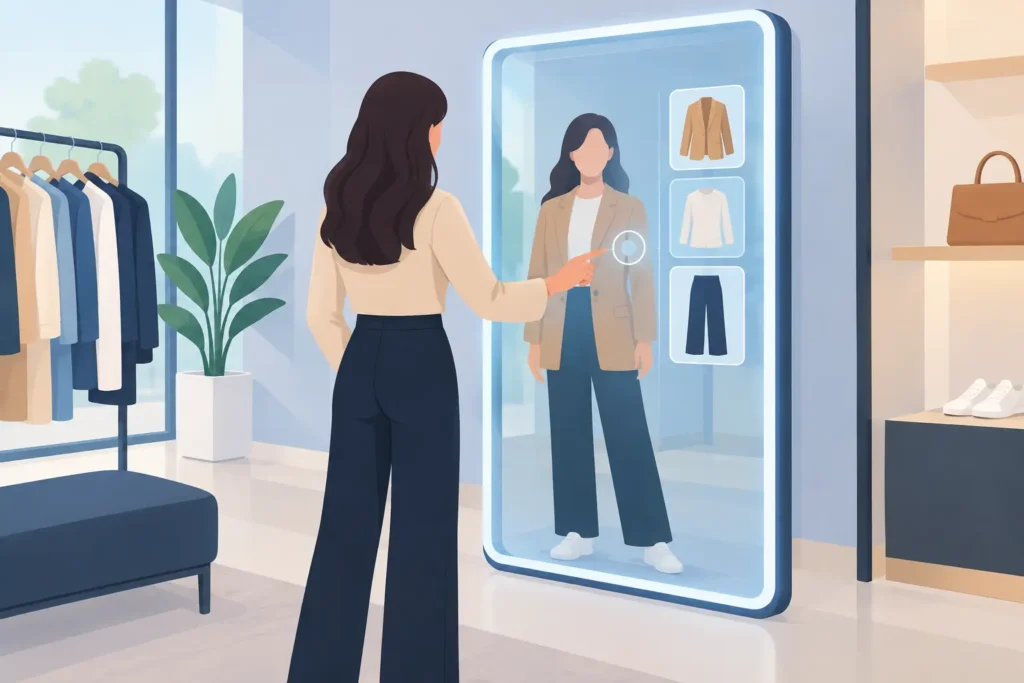
A fitting room is often where a shopper decides whether to buy, but many retailers still treat it as a plain, poorly lit utility space. Interactive mirrors turn that moment into a more informed product experience, giving shoppers useful information while giving retail teams more control over presentation, service, and campaign messaging.
For fashion, beauty, electronics, and premium lifestyle stores, these systems can support stronger merchandising without adding visual clutter to the sales floor. The right installation is not simply a screen behind glass. It is a commercial display tool that must suit the store layout, product range, staff workflow, and customer expectations.
What Are Interactive Mirrors?
An interactive mirror combines a reflective mirror surface with a digital display, touch capability, sensors, cameras, or connected software. When inactive, it looks like a conventional mirror. When activated, it can show product information, styling suggestions, promotional content, store messages, or service options.
The level of functionality varies. A basic unit may display brand content and product videos. A more advanced system may allow shoppers to request another size, browse available colors, save selected items, scan a product, or connect their fitting-room choices to a sales associate’s device.
This distinction matters when specifying equipment. A retailer that only needs campaign visuals should not pay for an elaborate software platform with features that staff will not use. Conversely, a high-volume apparel store may find that simple digital signage does not solve fitting-room service delays or missed cross-selling opportunities.
Where Interactive Mirrors Add Commercial Value
The strongest use case is not always the most technical one. Interactive mirrors should remove friction from a customer journey or improve the way merchandise is presented.
Fitting Rooms
In apparel retail, the fitting room is the natural location for an interactive mirror. A shopper can view suggested accessories, alternate colors, and coordinating items while trying on an outfit. If the system includes staff assistance requests, it can reduce the need for customers to leave the fitting room looking for a different size.
That supports a better service experience, particularly during peak periods when associates are stretched across a busy sales floor. It can also help protect conversion: a shopper who cannot quickly find an alternative size may abandon the purchase altogether.
Beauty and Cosmetics Counters
Beauty retailers can use interactive mirrors for virtual product visualization, tutorial content, and shade guidance. The technology is especially useful where hygiene, sampling limits, or product complexity create barriers to trial.
However, virtual visualization should support trained staff rather than replace them. Color accuracy, lighting, and skin-tone representation must be tested carefully. A poor digital result can damage confidence in both the product and the retailer.
Electronics and Premium Product Zones
For electronics, watches, eyewear, and other high-value categories, an interactive mirror can serve as a controlled product information point. It can demonstrate features, compare models, present warranty options, or reinforce a premium brand story without overloading the fixture with printed POS material.
In these locations, the mirror must work with security systems, display furniture, and cable management. A visually impressive screen is not useful if it creates access issues, exposes wiring, or interferes with anti-theft hardware.
Choosing the Right Interactive Mirror Configuration
Retail buyers should begin with the intended business outcome, not with the screen specification. Ask what the mirror needs to improve: fitting-room conversion, add-on sales, brand engagement, service speed, customer data collection, or campaign consistency.
Once the objective is clear, the configuration becomes easier to define. Screen size should suit viewing distance and the surrounding fixture. A mirror in a compact fitting room needs a different format from a large statement feature at a flagship store entrance. Brightness is equally important. Units positioned near storefront glazing or strong overhead lighting require displays that remain visible without appearing harsh when the store is quieter.
Touch capability is useful when shoppers are expected to browse or make requests independently. In other settings, motion activation or a non-touch interface may be preferable. Non-touch systems can be simpler to maintain and may suit premium environments where the primary goal is visual storytelling rather than extended interaction.
Commercial-grade components are essential. Retail equipment operates for long hours, often across multiple locations, and is subject to frequent cleaning, customer contact, and occasional impact. Specify durable mirror glass, suitable enclosure protection, reliable ventilation, accessible service points, and a display rated for commercial operation.
Content Determines Whether the Investment Performs
The physical installation gets attention, but content determines whether customers use the system more than once. Empty screens, outdated promotions, and slow interfaces quickly turn a premium feature into an expensive mirror.
Content should be direct and relevant to the location. In a fitting room, show items that complete the look, explain available colors or sizes, and make staff assistance easy to request. At a beauty counter, prioritize clear product demonstrations and simple comparison tools. At a branded activation point, use high-quality campaign visuals that can be updated by season, launch, or store event.
Avoid treating every screen as an advertising channel. Customers standing in front of a mirror are usually checking fit, appearance, or product suitability. The digital layer should help that decision, not interrupt it with excessive messages.
A practical content plan should also identify who owns updates. If store teams cannot change campaign material quickly, the system needs centralized content management with clear approval controls. Multi-location retailers benefit from shared templates that maintain brand consistency while still allowing regional offers or local inventory messages.
Plan Installation as Part of the Store Fixture Package
Interactive mirrors perform best when included early in the store planning process. Retrofitting is possible, but it often creates avoidable compromises around power supply, wall reinforcement, network access, ventilation, and finished detailing.
The mirror should align with adjacent displays, lighting, and traffic flow. In fitting rooms, it must leave enough space for customers to move comfortably, use hooks and benches, and view garments at a practical distance. On the sales floor, it should not obstruct aisles, sightlines, or accessibility requirements.
Lighting deserves special attention. A mirror can have a high-quality display and still provide a poor customer experience if overhead lighting casts shadows or alters perceived garment color. Even, flattering lighting is especially valuable in fashion and beauty environments, where the shopper’s reflection is part of the purchase decision.
For trade buyers and fit-out contractors, coordination between the display supplier, electrical contractor, joinery team, IT provider, and store operations team is essential. Clear responsibility for each element prevents late-stage changes and helps ensure the finished installation looks intentional rather than added on.
Measure What Matters After Launch
Interactive mirror performance should be reviewed against the purpose set at the beginning. If the mirror supports fitting rooms, useful measures may include conversion rate, average transaction value, attachment sales, assistance requests, and customer dwell time. For campaign-led installations, retailers may track interactions, content views, QR scans where applicable, or product inquiries.
Not every benefit will appear as a single direct sales number. A system that helps associates respond faster can improve customer satisfaction and reduce missed opportunities during busy trading hours. Still, the retailer should establish a realistic baseline before installation. Without one, it is difficult to distinguish a genuine performance gain from normal fluctuations in traffic or seasonal demand.
Maintenance should be part of this review. Screens need cleaning, software needs updating, and staff need clear guidance on basic troubleshooting. A mirror that remains offline for weeks sends the wrong message in a store built around polished presentation.
A Better Fit for the Right Retail Environment
Interactive mirrors are most effective when they solve a specific merchandising or service problem. They are not necessary for every store, and a conventional mirror with strong lighting, well-organized fixtures, and attentive staff may be the better investment for a smaller operation.
For retailers ready to add digital interaction, the priority is to select a solution that fits the selling environment rather than chasing novelty. JS Retail Displays can support commercial buyers in aligning digital display features with fixtures, presentation goals, and practical store requirements. When the mirror, content, lighting, and staff process work together, the customer sees more than a reflection – they see a clearer reason to buy.