
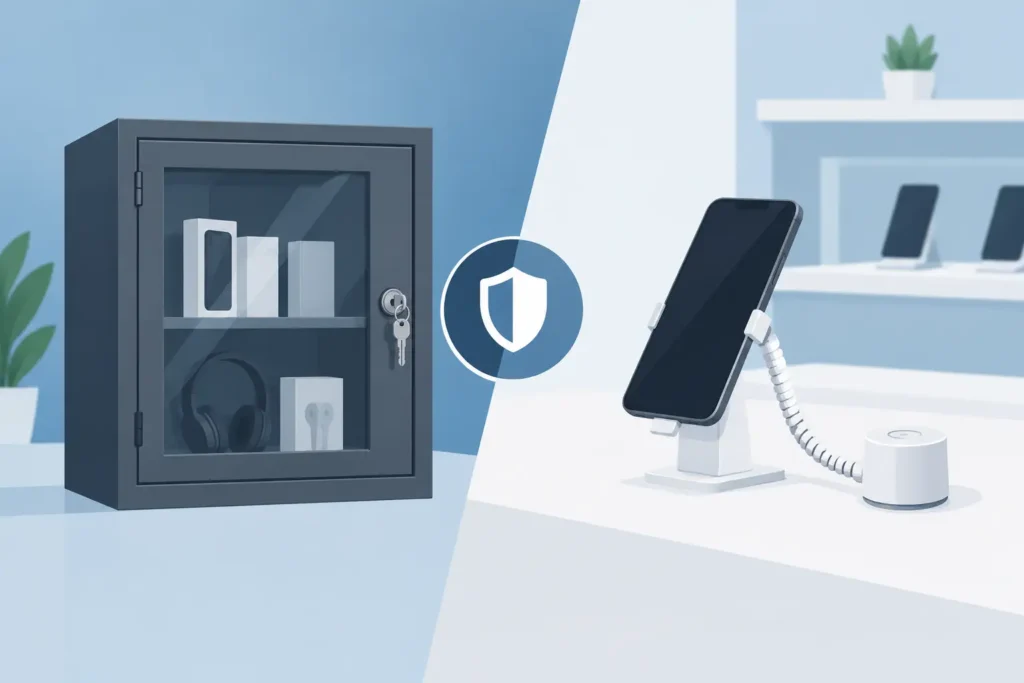
A premium smartphone display can create a costly choice for a retailer: place the product behind glass and reduce access, or let shoppers handle it and accept greater exposure to theft. The decision between lockable cabinets versus tether alarms affects more than shrink. It shapes customer interaction, staff workload, fixture planning, and the selling potential of every high-value item on display.
For electronics stores, beauty retailers, tool departments, and mixed-merchandise locations, neither option is automatically better. The right solution depends on product value, how much hands-on demonstration is needed, store traffic, staffing levels, and the visual standard expected on the sales floor.
Lockable Cabinets Versus Tether Alarms: The Core Difference
Lockable display cabinets provide a physical barrier. Merchandise is visible through glass or acrylic panels but cannot be touched, removed, or tested without staff assistance. They are commonly used for smartphones, watches, jewelry, fragrances, collectible items, camera equipment, and small accessories with a high resale value.
Tether alarms secure an individual product to a display fixture with a cable, sensor, or retractable pull mechanism. Customers can pick up, inspect, and in many cases operate the item within a defined range. If the tether is cut, disconnected, or improperly removed, the alarm system is designed to alert staff.
The practical distinction is simple. Cabinets prioritize containment. Tether alarms prioritize controlled interaction. A cabinet prevents unsupervised handling; a tether allows it while deterring unauthorized removal.
When Lockable Cabinets Are the Better Retail Choice
Lockable cabinets are most effective when merchandise needs protection with minimal dependence on staff response. A properly specified cabinet makes theft more difficult before an incident begins, rather than relying on an alarm to draw attention after interference occurs.
This is particularly valuable for small products that are easy to conceal. Fragrance gift sets, smartwatch accessories, premium razors, batteries, memory cards, and boxed electronics can disappear quickly in a busy store. Displaying these items in a lockable cabinet keeps them visible while establishing a clear access process.
Cabinets also support a more controlled presentation. Products can be arranged by brand, model, color, or price tier behind clean glazing, with space for printed product information and point-of-purchase messaging. This can be especially useful in premium retail environments where the display must look organized throughout the day.
Benefits beyond theft prevention
A lockable cabinet can protect products from excessive handling, damaged packaging, dust, and missing components. For retailers selling complete sets, technical accessories, or fragile merchandise, this helps preserve saleable condition. It also reduces the time associates spend recovering displays after heavy traffic.
Cabinets work well in departments with limited staff coverage. If an associate is serving another customer, a secure display continues to provide a visible deterrent. This does introduce a service consideration: customers may need to request assistance to see or purchase an item. Where response times are slow, that additional step can cost sales.
Where cabinets can limit sales
A physical enclosure is not ideal for every category. Consumers often want to feel the weight of a power tool, compare the finish of a smartwatch, test a phone screen, or examine a beauty device before buying. Keeping every sample behind a locked door can make the department feel less accessible and increase pressure on sales staff.
Cabinets also need to be planned into the store layout. Door swing, key or lock management, lighting, shelf adjustment, and access from the customer and staff sides should be considered early. For a multi-location rollout, standardizing cabinet sizes and locking procedures helps maintain consistency across stores.
When Tether Alarms Make More Sense
Tether alarms are designed for products that sell better when customers can interact with them. They are widely used for mobile phones, tablets, headphones, cameras, personal electronics, power tools, and small appliances. The customer can lift the product, inspect key features, and make a more confident decision without waiting for an associate.
For electronics retailers, this direct engagement is often central to the merchandising strategy. A functioning demo phone or tablet displayed on an alarmed stand communicates more than a boxed product behind glass. It gives shoppers a reason to pause, compare models, and begin a sales conversation.
Tethered displays can also use less space than full cabinets. On a wall bay, countertop, or freestanding table, individual alarmed holders can present multiple products at an accessible height. This supports open merchandising and keeps sightlines clear across the store.
The operational requirements of tethered displays
Tether alarms are effective only when they are maintained and correctly used. Cables, sensors, charging connections, adhesive mounts, and alarm bases need routine inspection. A weak attachment or discharged demo unit can undermine both security and presentation.
Staff must also know how to respond when an alarm activates. In a high-traffic environment, frequent false alarms can frustrate shoppers and cause employees to treat alerts as background noise. Clear installation standards, regular testing, and a simple response process are essential.
Tethers are a deterrent, not a complete physical enclosure. A determined offender may still damage a fixture or remove a product. Retailers with high shrink exposure should assess tethered displays alongside camera coverage, staff visibility, store entry and exit patterns, and the availability of secured stock storage.
Compare the Customer Experience, Not Just the Fixture Cost
The purchase price of a cabinet or alarm unit is only one part of the decision. A retailer should consider how the security method changes the path to purchase.
A lockable cabinet can communicate value and exclusivity. It works well when a product is normally requested from an associate, such as jewelry or premium fragrance. It can also slow the sale when customers expect self-service access. If a shopper has to locate an employee simply to compare two models, the display may create friction rather than confidence.
A tether alarm creates an open, interactive environment. It is often the stronger option for products where touch, testing, or live demonstration influences conversion. However, the display must remain clean, powered, organized, and functional. A tangled cable or empty alarm mount sends the opposite message.
Consider the sales behavior in the category. Customers purchasing a gift set may only need to read packaging and compare price. Customers purchasing a phone, speaker, or cordless tool usually want a closer inspection. Security should support that behavior rather than work against it.
A Practical Selection Framework for Store Projects
For new stores, renovations, and category resets, begin with a product-by-product assessment instead of selecting one security system for the entire sales floor. High-value merchandise often needs different treatment within the same department.
Use lockable cabinets when products are small, easily concealed, fragile, packaged for sale, or unlikely to benefit from self-service testing. They are also a practical choice where staffing is lean or the display is located near an exit, blind corner, or other higher-risk area.
Use tether alarms when product interaction is a recognized part of the buying decision and staff can monitor the display. They are well suited to hero products, live demonstrations, and comparison zones where customers need to handle several models.
In many projects, a combined approach delivers the best commercial result. A retailer may place one working, tethered sample of each key phone model on an open display while storing boxed inventory in a lockable cabinet or secured back stock area. A beauty department may use a cabinet for full retail units while providing tethered testers or supervised samples nearby.
This layered approach keeps the display approachable while protecting the inventory that carries the greatest loss risk. It also gives visual merchandisers more freedom to create a clear hierarchy: interactive samples at the front, protected stock organized behind or below them.
Specify the Fixture for Daily Retail Use
Whether selecting cabinets or tether alarms, commercial suitability matters. Fixtures should withstand repeated customer contact, regular cleaning, product changes, and the demands of store operations. Look closely at material quality, lock type, glass or acrylic thickness, cable reach, mounting method, power access, and compatibility with the existing fixture system.
Cabinets should provide practical staff access without compromising security. Adjustable shelving, integrated lighting, branded header space, and suitable locking mechanisms can improve both presentation and daily use. Tethered systems should allow products to be charged and reset efficiently, with cable management that does not distract from the merchandise.
For larger rollouts, consistency is equally important. Standardized display specifications help store teams replace components, maintain planograms, and present the same level of security across locations. JS Retail Displays can support this planning process by matching security and display requirements to product categories, fixture layouts, and commercial presentation goals.
The best security display does not simply make merchandise harder to take. It lets the right customer see, understand, and confidently choose the product while giving the store team a practical system they can maintain every day.