
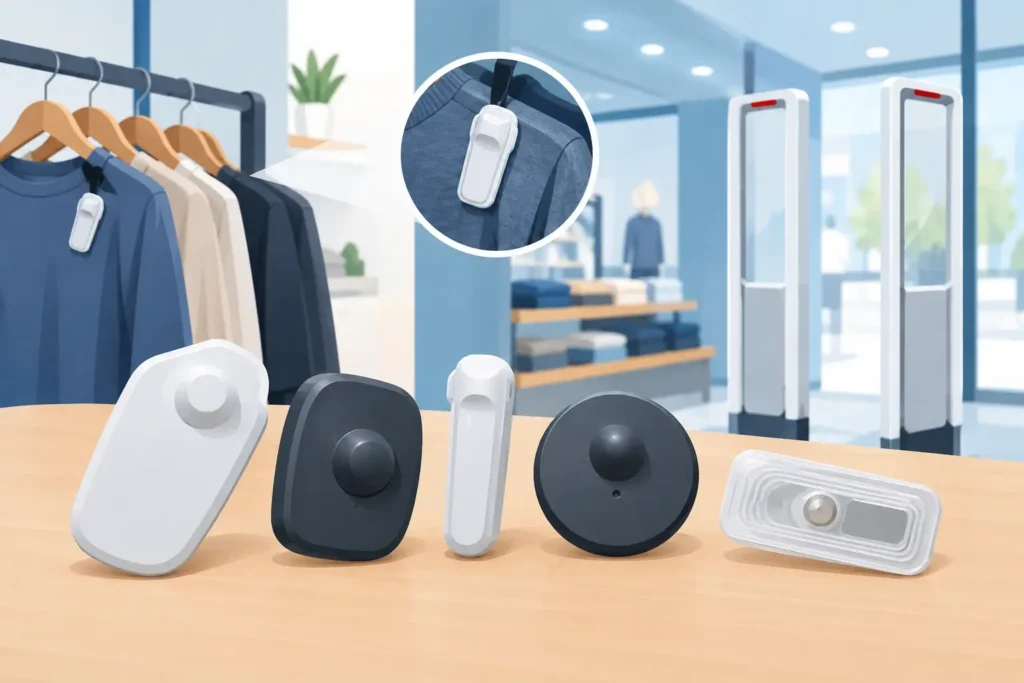
A tag that triggers an alarm but slows down checkout, damages packaging, or creates repeated false alarms is not a successful loss-prevention solution. Retailers asking which anti theft tags work need to assess more than the tag itself. The right choice depends on merchandise type, entrance layout, EAS antenna technology, staff procedures, and the level of shrinkage affecting the category.
For most stores, electronic article surveillance, or EAS, works best as part of a practical security plan. Tags create a visible deterrent, detection systems protect the exit, and clear store processes help staff respond appropriately. The goal is to reduce preventable loss without making shopping or payment more difficult.
Which Anti Theft Tags Work for Different Products?
There is no single tag that suits every department. A fashion retailer needs reusable hard tags that protect garments without leaving holes, while an electronics store may need stronger locking devices for boxed accessories. Supermarkets often require disposable labels or specialized bottle tags that work with high-volume replenishment and fast checkout.
The most effective specification begins with the product. Consider its value, packaging material, shelf position, rate of sale, and how easily it can be concealed. A small, high-value product near an exit usually calls for a more visible and physically secure solution than a low-value item in a closely supervised aisle.
Hard Tags for Apparel and Soft Goods
Hard tags are the standard choice for clothing, footwear, handbags, and other soft merchandise. They attach with a pin and are removed at the point of sale using a compatible detacher. Their visible presence is valuable: a potential thief can see that the item is protected before attempting to remove it.
For general apparel, a standard hard tag provides an efficient balance of security, appearance, and cost. High-risk fashion categories may benefit from ink tags, which contain ink capsules designed to release if the tag is forcibly opened. Ink options add a stronger deterrent, but staff must be trained to remove them carefully and retailers should consider the cost of damaged merchandise if mishandling occurs.
Garment type matters. Fine fabrics, lingerie, knitwear, and delicate accessories may need a lanyard tag, clamp-style tag, or another attachment method that avoids piercing the material. Using a heavy tag on a lightweight garment can affect the customer’s perception of quality and create unnecessary fitting-room friction.
Adhesive EAS Labels for Packaged Goods
EAS labels are disposable security labels applied directly to product packaging, cartons, sleeves, or inside printed labels. They are widely used in grocery, pharmacy, cosmetics, books, media, and boxed consumer goods because they are compact and can be applied quickly during receiving, packing, or source tagging.
Labels work particularly well where reusable hard tags would be impractical. They are unobtrusive, low cost per unit, and compatible with high-volume product handling. At checkout, the label is deactivated rather than removed, allowing the product to leave the store without an alarm.
Their limitation is physical strength. An adhesive label does not stop someone from opening a box or removing the protected package from the store if it is not detected. For high-value electronics, premium cosmetics, or frequently stolen small products, labels may need to be combined with locked displays, security cases, or more substantial tags.
Bottle Tags for Liquor and High-Value Beverages
Bottle tags are designed to fit around the neck of wine and spirits bottles. They offer a strong visual deterrent and can be reused, making them a practical choice for liquor departments with recurring shrinkage. A properly fitted bottle tag is difficult to remove without the correct detacher and does not require adhesive on the bottle label.
This solution is especially useful when stores display premium bottles openly but want to preserve product visibility. The tag must fit the bottle shape and neck size used in the range. Before committing to a rollout, test several bottle formats, including promotional packs and imported brands, to avoid exceptions that staff cannot secure consistently.
Cable Tags, Spider Wraps, and Safer Cases
For electronics, tools, small appliances, and boxed accessories, cable-based tags and spider wraps provide more physical control than a standard label. Spider wraps stretch around boxed merchandise and typically include an alarmed cable mechanism. They are suitable for products that are easy to conceal or expensive enough to justify an additional layer of protection.
Security cases and locked display boxes are often a better option for very small products, such as memory cards, batteries, razor cartridges, and premium cosmetics. They allow merchandise to remain visible while preventing easy removal or package tampering. The trade-off is operational: associates need to unlock cases promptly, or customers may abandon a purchase rather than wait for assistance.
Match Tags to Your EAS Technology
A tag only works when it is compatible with the store’s installed detection system. The two most common EAS technologies are radio frequency, usually called RF, and acousto-magnetic, usually called AM. RF systems commonly use 8.2 MHz labels and tags, while AM systems use 58 kHz tags and labels.
Do not assume that a tag that looks similar will work with your antennas. An RF hard tag will not reliably protect merchandise in an AM system, and the same is true in reverse. Compatibility must also extend to detachers, deactivation pads, lanyards, pins, and replacement accessories.
AM technology is often selected where retailers need strong detection performance around certain materials or in demanding store environments. RF is widely used and can be a cost-effective choice for many retail formats. The best system is the one that fits the store’s product mix, entrance conditions, and existing infrastructure, not simply the one with the lowest tag price.
Detection Performance Depends on Installation
Even the right tag can perform poorly if the EAS system is badly positioned or poorly maintained. Antennas need appropriate spacing, clear detection paths, stable power, and regular testing. Metal fixtures, electronic equipment, promotional displays, and store entrance changes can affect performance.
Before ordering tags in volume, test them on actual merchandise and packaging. Walk protected items through the detection zone at different heights and orientations. Test both new stock and items that have been handled, folded, or placed inside shopping baskets. This simple trial identifies compatibility issues before they become a chain-wide operational problem.
False alarms deserve equal attention. Frequent alarms condition staff and shoppers to ignore the system, reducing its deterrent value. Causes can include incomplete deactivation, tags left in reusable bags, incompatible labels, tags too close to deactivation equipment, or an antenna setting that requires service. A reliable program tracks these incidents and addresses the cause rather than accepting false alarms as normal.
Build Checkout Procedures Around the Tag
Security tags should support efficient selling, not create a bottleneck at the register. Staff need to know where tags are placed, which detacher to use, how to deactivate labels, and what to do when an alarm sounds. This is particularly important for stores with part-time teams, seasonal staff, or multiple checkout points.
Tag placement should be standardized by category. A hard tag hidden deep inside a garment may be missed at checkout. A label placed over product information can create customer frustration. A tag on a box seam may prevent legitimate opening after purchase. Clear placement rules make receiving, merchandising, fitting-room control, and checkout more consistent.
For high-risk categories, consider a simple exception process. If a tag cannot be removed or a label does not deactivate, staff should have a defined method for resolving the issue without delaying the customer or leaving protected merchandise unsecured.
Choose Security Levels by Shrink Risk
Not every item needs the same protection. Over-tagging can increase labor, use excessive consumables, and make the store feel restrictive. Under-protecting high-loss products leaves a visible gap in the loss-prevention plan.
A tiered approach is usually more cost-effective. Low-risk packaged items may use discreet EAS labels. Medium-risk apparel and accessories may use standard reusable hard tags. High-risk goods may require ink tags, bottle tags, spider wraps, locked cases, or placement in attended display areas. Review shrink data, not assumptions, when deciding which categories belong in each tier.
Store design also affects the result. Clear sightlines, organized fixtures, controlled fitting rooms, appropriate cash-wrap positioning, and well-lit exits make EAS more effective. Security equipment performs best when it supports a well-planned retail environment rather than compensating for poor layout.
Make the Purchase Decision on Total Operating Cost
The cheapest tag is not always the lowest-cost solution. Reusable hard tags require collection, counting, detaching, and periodic replacement. Disposable labels reduce handling after the sale but add a recurring consumable cost. Specialized tags provide stronger protection but may require dedicated accessories or more staff time.
Evaluate the full operating picture: tag cost, expected reuse, detacher compatibility, deactivation equipment, labor at receiving and checkout, false-alarm risk, and the value of loss prevented. For multi-location retailers, standardizing technology and tag types across stores can simplify training and replenishment.
JS Retail Displays can help retailers align tag types, EAS compatibility, and display protection with the practical demands of their store format. The strongest result comes from selecting security products as part of the selling environment, where merchandise remains accessible, visible, and properly protected.