
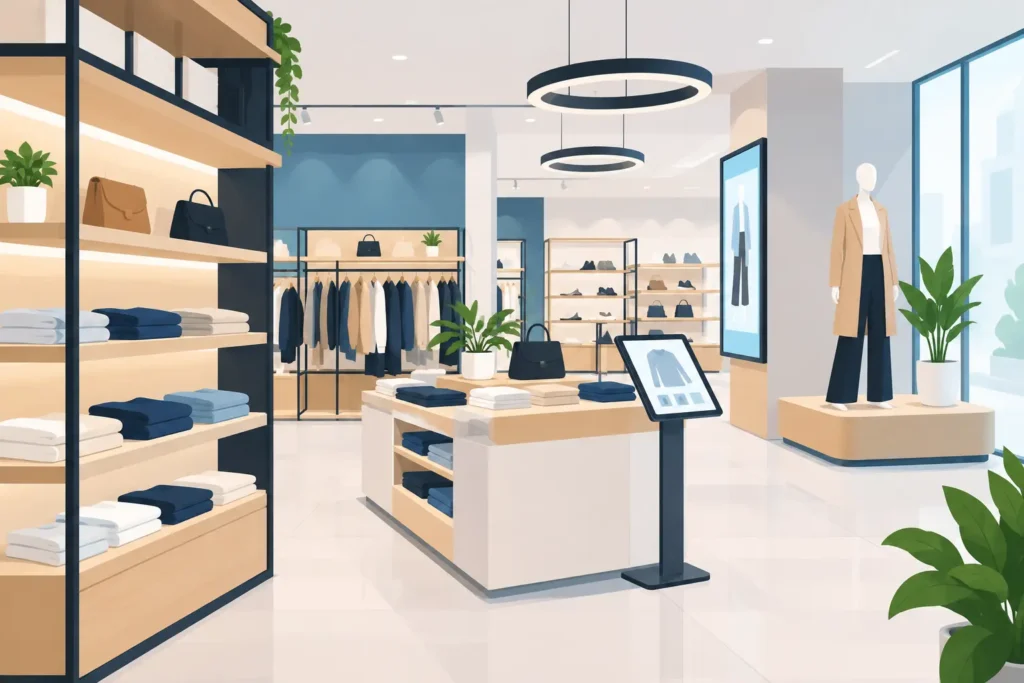
A fixture plan is no longer just a decision about shelving, gondolas, and checkout counters. It affects how easily shoppers find products, how quickly staff can replenish stock, how well high-value merchandise is protected, and how often a store can refresh its presentation. The leading smart retail fixtures trends reflect this shift: retailers are selecting display systems that work harder operationally while creating a more relevant shopping experience.
For supermarket operators, fashion retailers, electronics stores, and fit-out contractors, the priority is not technology for its own sake. The right fixture solution must be durable, easy to service, suitable for the product category, and practical within the available floor plan. Smart fixtures earn their place when they improve visibility, support better merchandising decisions, or reduce friction for staff and customers.
Smart Retail Fixtures Trends That Matter
The most useful changes in retail design are centered on flexibility, connected information, and stronger integration between physical presentation and store operations. These trends can be applied in a full store fit-out or introduced gradually in high-impact departments.
Modular systems are replacing fixed layouts
Retailers need selling floors that can respond to seasonal demand, promotional launches, changing inventory, and evolving shopper behavior. As a result, modular wall systems, adjustable shelving, mobile display units, and reconfigurable gondola accessories are becoming standard requirements rather than optional extras.
A supermarket may need to expand a promotional endcap before a holiday period, while a fashion store may need to change a feature wall when a new collection arrives. Fixtures with adjustable brackets, shelf dividers, hooks, sign holders, and interchangeable display components make those changes faster and more consistent.
The trade-off is that modularity must be planned properly. A highly flexible system with too many incompatible parts can create storage and maintenance issues. The best approach is to standardize key fixture families across the store or across multiple locations, while allowing targeted flexibility in promotional and high-turnover zones.
Digital signage is moving closer to the shelf
Large-format digital screens remain valuable at entrances, cash wraps, and feature areas, but retailers are increasingly using smaller digital displays where customers make product decisions. Shelf-edge screens, digital price displays, interactive product information, and compact promotional monitors can bring timely messages directly into the buying zone.
This is particularly relevant for electronics, cosmetics, specialty food, and other categories where features, offers, or product comparisons influence selection. A digital display can demonstrate a product, show an active promotion, or provide product specifications without requiring extensive printed material.
However, digital fixtures require more than a screen and a power point. Buyers should assess screen placement, cable management, ventilation, mounting strength, content updates, cleaning requirements, and service access. A poorly placed display that obstructs merchandise or is difficult to maintain will quickly lose its value. Digital elements should support the fixture and the product, not compete with them.
Data-informed merchandising is influencing fixture choices
Retailers have more access to sales data, stock movement information, traffic patterns, and campaign results than before. This is changing how fixtures are specified. Instead of selecting displays based only on appearance or standard dimensions, operators are asking where a fixture will produce the strongest commercial result.
For example, a high-margin product category may justify a more prominent illuminated display or a dedicated locked cabinet. A slow-moving category may benefit from clearer shelf communication, better-facing capacity, or a revised location near complementary products. In grocery retail, shelf management accessories such as dividers, pushers, label holders, and front rails can improve presentation and simplify replenishment in fast-moving areas.
Data does not eliminate the need for experienced visual merchandising. It provides a stronger basis for testing layout decisions. A practical store team can compare sales before and after changing an endcap, a feature table, or a digital message, then retain the configuration that performs best.
Security Is Becoming Part of the Display
Loss prevention can no longer be treated as an isolated system installed after the store design is complete. One of the strongest smart retail fixtures trends is the integration of security into the customer-facing display environment.
Electronics retailers, pharmacies, beauty stores, and high-value fashion departments need display solutions that allow products to remain visible and accessible while reducing the risk of theft. Security hooks, locked display cabinets, safer product tethers, alarmed stands, and electronic article surveillance systems can be incorporated without making the store feel restrictive.
The balance depends on product value, theft exposure, staff coverage, and customer expectations. A fully locked cabinet may be appropriate for premium devices or controlled items, but it can slow the purchase process for lower-value accessories. In other cases, an open display with a security tether or protected peg hook maintains a more approachable shopping experience.
Security fixtures should also be positioned with staff sightlines in mind. A well-designed display supports visibility from service counters and main aisles, avoids hidden corners, and keeps the product area organized. Good presentation and good loss prevention often reinforce each other.
Lighting and Illumination Are Becoming More Targeted
Lighting has always influenced retail presentation, but fixture-integrated illumination is now being used more strategically. LED-lit shelving, illuminated poster frames, backlit signage, and lighted display cabinets can direct attention to featured products and improve legibility in areas where ambient lighting is limited.
In fashion and beauty retail, lighting helps communicate color, texture, and product quality. In food retail, it can make specialty products, bakery offers, and fresh displays more visually appealing. For showrooms and electronics stores, illuminated fixtures can create clear focal points for launches and premium ranges.
The practical consideration is consistency. Lighting temperature, brightness, and fixture finish should complement the wider store environment. Excessive lighting can create glare, distort product color, or make an aisle feel visually crowded. Energy-efficient LED systems with accessible components are generally the more cost-effective choice for commercial use, especially in locations with long operating hours.
Sustainable Fixture Decisions Are Becoming Commercial Decisions
Sustainability is influencing fixture purchasing, but commercial buyers still need a clear operational case. Long-life materials, reusable components, repairable systems, and fixtures that can be relocated or reconfigured reduce replacement costs over time. This is especially relevant for chains and multi-site projects where consistency and repeat ordering matter.
Metal shelving, durable acrylic holders, quality sign frames, and modular display parts can often stay in service through several merchandising cycles. Retailers can also reduce printed signage waste by using reusable poster holders, changeable graphic systems, and selected digital communication points.
Not every sustainable-looking material is suitable for high-traffic retail. Buyers should consider cleaning needs, load capacity, impact resistance, local climate conditions, and replacement availability. A fixture that fails early is neither cost-effective nor environmentally responsible. Durability remains one of the most practical sustainability measures in a commercial store.
How to Apply These Trends Without Overbuilding
Smart fixtures should be specified according to the store’s retail format and commercial priorities. A compact convenience store may gain more from efficient gondola accessories, clear pricing communication, and well-positioned anti-theft solutions than from extensive digital installations. A flagship electronics store may benefit from interactive product displays, integrated charging and security, and illuminated feature zones.
Start by identifying the areas where presentation currently creates a problem. This may be poor product visibility, slow promotional changeovers, congested aisles, inconsistent signage, excessive shrinkage, or difficult replenishment. Then select fixture improvements that address those specific issues.
For larger projects, it is useful to separate the plan into permanent fixtures, flexible merchandising components, and campaign-led displays. Permanent fixtures establish the store’s capacity and circulation. Flexible components allow departments to adapt. Campaign displays provide the speed needed for promotions and seasonal activity. This structure helps control budget while ensuring the store does not become fixed in a layout that is difficult to update.
JS Retail Displays supports this practical approach by helping commercial buyers match shelving, signage, digital displays, security products, and merchandising accessories to the needs of the selling environment. The goal is not to fill a store with more equipment. It is to create a better-performing retail space where each fixture has a clear purpose.
The strongest fixture investment is usually the one that makes the next store change easier. Select systems that present products clearly today, then give your team the ability to adjust quickly when the product mix, promotion calendar, or customer demand changes.