
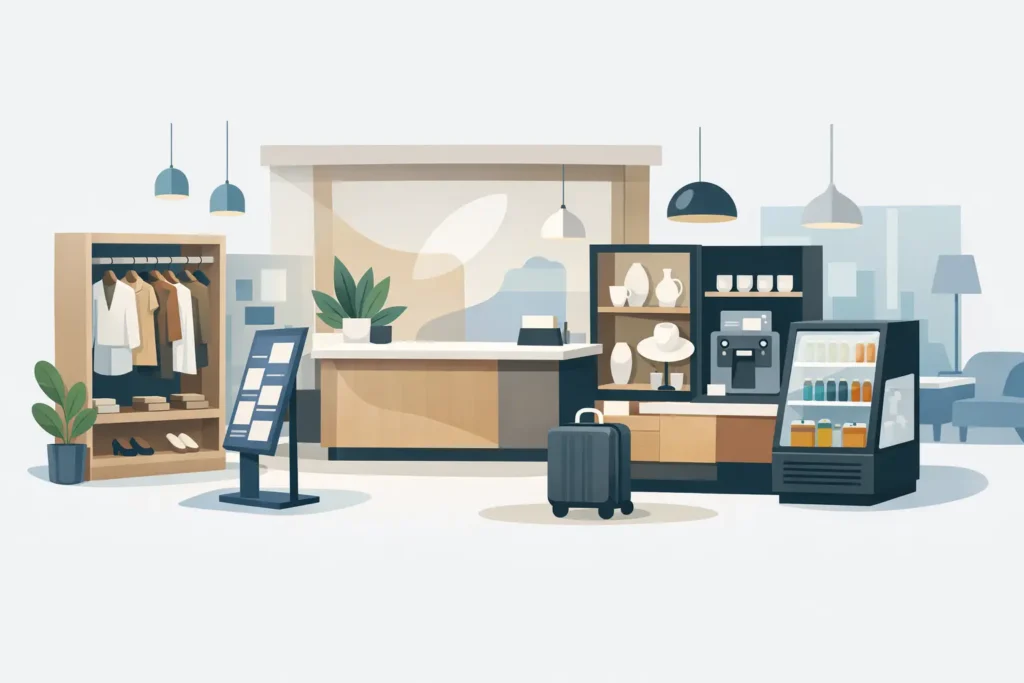
A hotel lobby has only a few seconds to tell guests where to go, what is available, and what standard of service to expect. Commercial display fixtures for hotels turn that first impression into a clear, organized experience, whether they are presenting brochures, retail products, event information, menus, or guest amenities. The right system supports the brand while standing up to constant public use.
Why Hotel Display Fixtures Need a Commercial Approach
Hotel displays are not decorative extras. They guide guest movement, reduce repeated questions at the front desk, promote on-site services, and create revenue opportunities in areas that might otherwise go unused. A brochure holder near reception can direct guests to spa services and local attractions. A well-planned retail wall can make travel essentials, gifts, and branded merchandise easier to shop. Digital displays can keep event schedules, dining promotions, and wayfinding information current throughout the day.
The commercial requirement is different from selecting residential furniture or occasional décor. Hotel fixtures must tolerate luggage traffic, frequent cleaning, changing promotions, and handling by a wide range of guests. They also need to fit the operational rhythm of the property. A display that looks polished but takes an hour to update is rarely practical for a busy hotel team.
For procurement teams and fit-out contractors, the goal is to balance appearance, durability, capacity, and ease of maintenance. The best fixture program feels considered to guests and straightforward to operate for staff.
Start With the Hotel Zones That Drive Use
Before choosing materials or finishes, identify where displays will be placed and what each location needs to achieve. A fixture that works in a boutique retail corner will not necessarily suit a conference foyer or breakfast service area.
Lobby and Reception Areas
Reception is a high-visibility zone, but it should not become cluttered. Use compact brochure displays, acrylic sign holders, poster frames, and digital screens to present essential information without covering the counter or interrupting sightlines. Clear holders work well for local maps, activity cards, taxi details, and restaurant menus because staff can quickly see when stock needs replenishing.
Freestanding sign systems can guide arrivals toward check-in, concierge services, elevators, or event registration. Choose stable bases and low-profile footprints so the fixture does not obstruct circulation, particularly around luggage routes and accessible pathways.
Hotel Retail Corners and Gift Shops
Retail areas need a more sales-focused approach. Wall-mounted shelving, gondola displays, slatwall accessories, gridwall panels, and countertop units can organize products by category while keeping merchandise visible. Adjustable systems are especially useful where the product range changes by season, guest profile, or local events.
For high-value items such as electronics, jewelry, or premium souvenirs, combine visible presentation with security measures. Lockable cases, secure display hooks, and anti-theft solutions can protect stock without making the retail area feel unwelcoming. The appropriate level of security depends on product value, staffing levels, and the location of the shop within the property.
Dining, Spa, and Event Spaces
Hotels often lose promotional opportunities because information is placed too late or in the wrong area. Menu displays near restaurant entrances, illuminated signs outside a spa, and poster holders in elevator lobbies can encourage guests to make decisions before they leave the building.
For meeting rooms and conference spaces, use displays that can be updated quickly between functions. Snap frames, magnetic holders, sign stands, and digital displays allow the events team to replace schedules, room assignments, and sponsor materials without replacing the fixture itself. This is particularly valuable for properties hosting back-to-back corporate events.
Specify Commercial Display Fixtures for Hotels by Function
A fixture should be selected for its job first, then its appearance. This avoids a common purchasing problem: selecting a visually attractive product that lacks the capacity, access, or durability required on site.
Consider the product being displayed. Heavy bottles, packaged food, and boxed retail products require shelving with suitable load capacity and secure brackets. Lightweight brochures, leaflets, and price cards can use acrylic holders or wire literature racks. Digital content requires proper screen placement, protected cable management, and access for maintenance.
Also consider how frequently the display changes. Permanent wayfinding may justify fabricated signage or illuminated branding elements. Weekly dining promotions are better suited to poster frames, chalkboard-style panels, or insert-based holders. In fast-moving spaces, modular components help staff update the presentation without calling in a contractor.
Material selection matters in hotel environments. Powder-coated metal is suited to high-traffic applications because it is strong, cleanable, and available in finishes that work with contemporary or classic interiors. Acrylic provides a clean view of printed materials and products, but it should be thick enough for the intended use and positioned away from areas where impact is likely. Wood-effect panels can add warmth, while metal frames and durable shelf components provide the long-term structure behind the finish.
Keep Branding Consistent Without Overfilling the Space
A branded hotel environment should be recognizable, not crowded. Too many signs, competing colors, or overloaded brochure racks can make even a premium property feel disorganized. Establish a hierarchy: essential guest information first, service promotion second, and retail messaging third.
Use consistent frame colors, sign sizes, typography, and display finishes across public areas. For example, matching poster frames in the lobby, restaurant entrance, and lift lobby create a more controlled visual standard than a collection of unrelated sign holders. Illuminated signage can provide visibility in dim areas, but brightness and placement should support the atmosphere rather than dominate it.
Product presentation should also be easy to read at a glance. Leave sufficient space between merchandise, use clear category signage, and avoid placing too many small items on one shelf. A smaller, better-managed display usually performs better than a large unit filled without structure.
Plan for Cleaning, Replenishment, and Staff Access
Hotel teams work across shifts, and display fixtures need to remain presentable even when the staff member responsible for merchandising is not available. Choose systems that are simple to clean, easy to refill, and practical to inspect.
Avoid fixtures with hard-to-reach corners in areas exposed to food service, pool traffic, or frequent guest handling. Select stable shelves and display bases that do not require continual adjustment. Where printed inserts are used, standardize the sizes so replacements can be produced quickly by the marketing or operations team.
Cable management is another operational detail that should be addressed early. Digital screens, illuminated signs, and charging-related displays can look untidy and create avoidable hazards if wiring is added as an afterthought. Specify cable routing, power access, and maintenance clearance during the fit-out stage.
Build a Practical Fixture Schedule Before Ordering
For a hotel project, a fixture schedule helps align procurement, design, operations, and installation teams. It should identify the display type, location, dimensions, finish, intended product or message, and any fixing or power requirements. This reduces late changes and helps ensure that wall-mounted systems, shelving, signage, and security components arrive with the correct accessories.
The schedule should also account for future changes. A newly opened hotel may begin with a focused retail assortment, then expand once guest purchasing patterns are clear. Modular fixtures allow the property to add shelves, hooks, holders, and signage without replacing the full system.
JS Retail Displays supports commercial buyers with display categories that can be combined across hotel retail, guest information, promotional signage, and secure merchandise presentation. Working from a clear layout and fixture schedule makes it easier to specify solutions that match the property’s operational needs.
Common Selection Mistakes to Avoid
The most expensive mistakes usually happen before installation. Buying by appearance alone can leave a property with shelves that cannot carry stock, signage that is difficult to update, or retail units that do not fit the available floor area.
Do not underestimate guest circulation. Freestanding displays need enough clearance for luggage, wheelchairs, strollers, and service carts. Do not place promotional fixtures where they block reception queues, fire exits, or access to elevators. In compact spaces, wall-mounted and countertop systems often deliver better visibility with less disruption.
It is also worth avoiding a one-size-fits-all approach. A luxury resort, airport hotel, extended-stay property, and city conference hotel each have different guest behavior. The right display mix depends on what guests need, where they pause, and what the hotel wants to promote at that moment.
Well-selected fixtures help hotel teams present information with confidence, sell more effectively in guest-facing areas, and keep public spaces organized long after opening day. Start with the guest journey, specify for daily operation, and choose display systems that can adapt as the property evolves.